 blog
Hiring Professional Pool Cleaners vs DIY: Cost Guide
Table of Contents
- DIY Pool Care vs Professional Pool Cleaners: The Core Trade-Off
- Pool Cleaning Service Cost: What You Pay For and Why
- DIY Pool Maintenance Checklist: Tools, Tasks, and Time
- How Often to Clean a Pool: Schedules That Actually Work
- Pool Water Testing and Chemical Balancing: The Learning Curve
- Safety and Chemical-Handling Risks of DIY Pool Care
- Hybrid Maintenance Plans and Long-Term Equipment Costs
- Decision Framework: Which Option Fits Your Pool and Lifestyle?
- Frequently Asked Questions
Last Updated: October 18, 2026
DIY Pool Care vs Professional Pool Cleaners: The Core Trade-Off
The decision between hiring professional pool cleaners and DIY pool maintenance comes down to whether your time, tools, and chemistry knowledge are worth more than the service fee.
DIY pool care saves money on paper but demands a real weekly commitment plus a water-chemistry learning curve that catches most first-time owners off guard. Professional pool service trades that fee for consistency, expertise, and someone else handling the chemicals.
Pool Cleaning Service Cost: What You Pay For and Why
Pool cleaning service cost is not a single number. It bundles labor, chemicals, equipment wear, and accountability. Pricing varies widely by pool size, debris load, and visit frequency, so get a written quote rather than guessing from a national average.
What actually drives the fee:
- Pool size and shape. A large freeform pool with heavy landscaping takes longer to skim, brush, and vacuum than a small rectangular one.
- Visit frequency. Weekly service costs more per month than biweekly, but biweekly pools often need chemical catch-up work.
- Chemical allowance. Some companies include chemicals, others bill them separately. Ask which model applies before you compare quotes.
- Debris and season. A pool under mesquite or near a dusty lot needs more labor than a screened, covered pool.
Labor is the biggest line item in any service fee, and it's the one DIY owners effectively pay themselves. Price the DIY route honestly against what an hour of your time is worth.
A Transparent Year-One Cost Comparison
Build a year-one total for each path using the same categories. The numbers below are typical ranges for a mid-size residential pool in a warm climate; your quote will vary with pool size, local labor rates, and how much you do yourself.
| Cost Category | DIY (Annual) | Professional Weekly Service (Annual) |
|---|---|---|
| Service labor | $0 (your time) | Roughly $1,200-$2,400 for weekly visits at common market rates |
| Chemicals | Roughly $300-$700 | Often included, or $300-$700 billed separately |
| Test kit and reagents | $50-$150 | Included |
| Tools (pole, net, brush, vacuum, hose) | $150-$400 one-time, plus $50-$100/yr replacement | Included |
| Filter media and minor parts | $50-$150 | $50-$150 (parts usually billed) |
| Equipment repair risk from poor chemistry | Higher | Lower with consistent oversight |
Two things stand out. The DIY chemical and tool line is not zero, often $500-$1,000 in year one before counting your own hours. And the professional fee is mostly labor, exactly the input DIY owners substitute with their weekends.
How Pool Size and Local Labor Rates Move the Totals
A small above-ground pool with light use may have different service costs than a large in-ground pool with water features and heavy landscaping. Local labor rates swing the fee most, and chemicals scale with water volume, a 20,000-gallon pool uses roughly twice the sanitizer of a 10,000-gallon pool.
What a Standard Visit Includes, and What Costs Extra
A standard weekly visit covers skimming, emptying skimmer baskets, brushing walls and steps, vacuuming or running the automatic cleaner, testing and balancing water, and a visual check of the pump and filter. Add-ons that may cost extra include green-water recovery, filter deep cleaning or media replacement, acid washing, tile cleaning, and storm cleanup. Get the scope in writing and confirm whether chemicals are capped or unlimited, an uncapped allowance is where surprise charges appear.
The Long-Term Equipment and Surface Cost Nobody Budgets For
Routine inspection and stable water balance are the cheapest insurance against premature equipment replacement. A pump in poorly balanced water works harder and fails sooner; plaster etches and stains under chronically low pH; metal fittings corrode when alkalinity drifts.
The U.S. Department of Energy guidance on pool pump energy use is worth reading if you're weighing an equipment upgrade, since circulation and pump runtime affect both water quality and your power bill.
DIY Pool Maintenance Checklist: Tools, Tasks, and Time
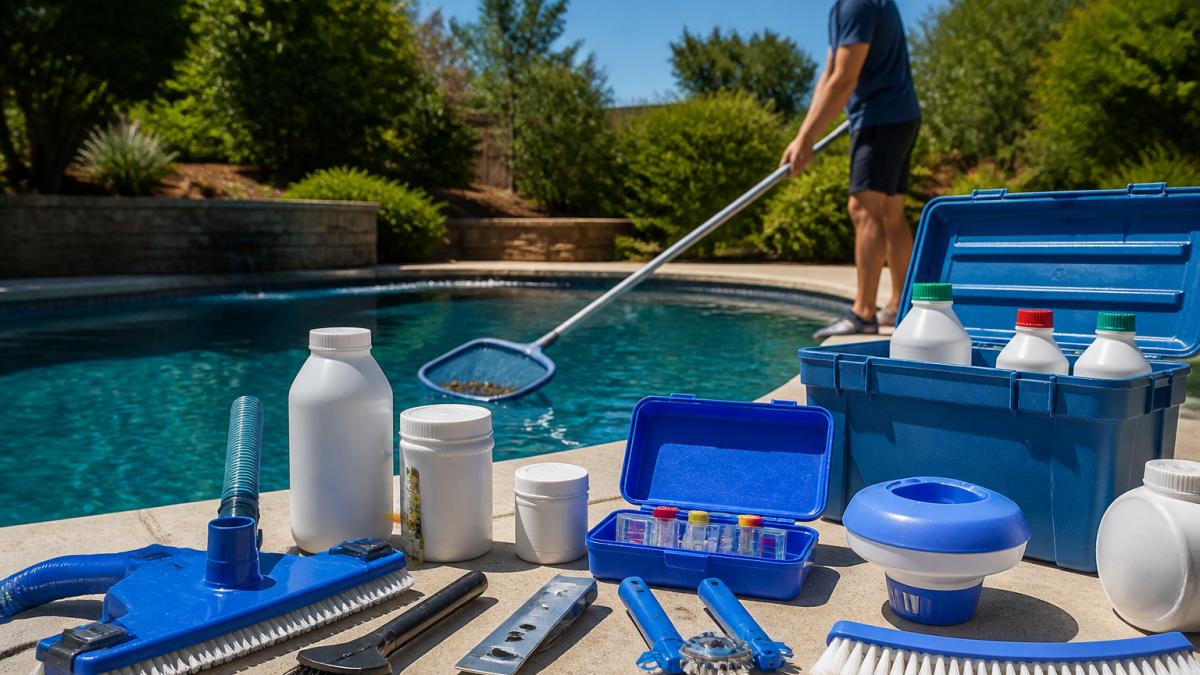
A workable DIY pool maintenance checklist covers four jobs: skimming, brushing, vacuuming, and filter care, plus water testing. Skip any one for a few weeks and clarity drops fast.
Essential Tools and Supplies
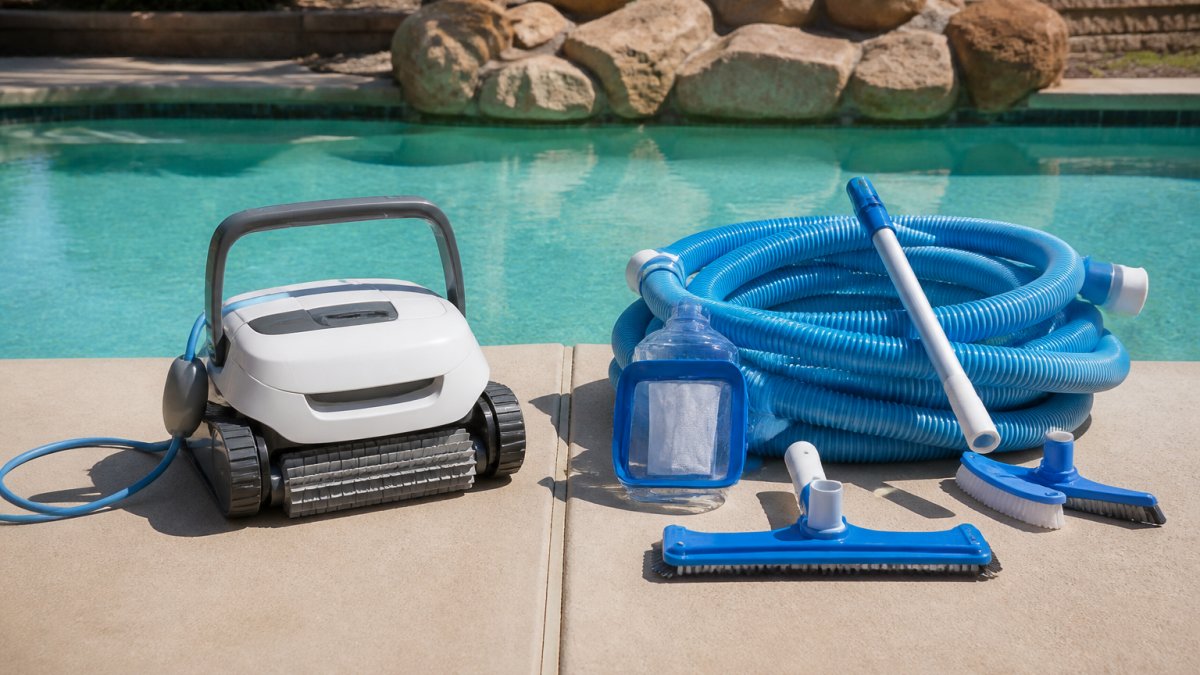
You need a telescoping pole, skimmer net, wall brush, vacuum head and hose, test kit or strips, and the sanitizer and balancers your water needs. A leaf rake helps in fall; brushes and hoses wear out over time.
Weekly and Monthly Task List
- Skim the surface and empty the skimmer baskets
- Brush walls and steps to break up algae before it settles
- Vacuum the floor or run the automatic cleaner
- Test chlorine, pH, and alkalinity, then dose as needed
- Check the pump basket and clear debris
The time commitment is real. A common mistake is buying the tools but never building the habit, which is how pools turn green.
How Often to Clean a Pool: Schedules That Actually Work
How often to clean a pool depends on usage and debris, not a fixed calendar. A heavily used summer pool needs skimming every day or two and a full clean weekly; a lightly used, covered pool can stretch to weekly skimming and biweekly brushing. Professional pool service typically runs weekly, with extra trips after storms or parties.
A schedule that actually works looks like this:
| Frequency | Task | Why It Matters |
|---|---|---|
| Daily or every other day | Skim surface, empty baskets | Stops debris from sinking and feeding algae |
| Weekly | Brush walls, vacuum, test water | Keeps surfaces clean and chemistry stable |
| Weekly to biweekly | Clean or backwash filter | Restores circulation and water clarity |
| Monthly | Inspect pump, fittings, water level | Catches equipment problems early |
| After storms or heavy use | Shock and re-test | Prevents algae blooms and cloudy water |
Consistent upkeep beats occasional marathon cleaning sessions every time.
Pool Water Testing and Chemical Balancing: The Learning Curve
Pool water testing and chemical balancing is where DIY pool care separates the committed from the curious.
The learning curve is manageable but not instant. New owners commonly over-correct one reading, throw the water out of balance, then chase it for weeks.
For reference on safe chemical ranges, the Centers for Disease Control and Prevention guidance on pool water quality is a solid starting point.
Safety and Chemical-Handling Risks of DIY Pool Care
Chemical-handling risk gets the least attention and matters the most. Chlorine, muriatic acid, and algaecides are harsh products.
The Occupational Safety and Health Administration hazard guidance on pool chemicals outlines how these products can injure people when mishandled.
Physical effort is the other risk. Brushing, vacuuming, and hauling chemical jugs in summer heat is real work, a genuine concern for older owners or anyone managing a health condition.
Hybrid Maintenance Plans and Long-Term Equipment Costs
Long-term equipment costs deserve a line in your budget either way. Pumps, filters, heaters, and surface finishes wear out, and neglected chemistry shortens their life.
The U.S. Department of Energy guidance on pool pump energy use is worth reading if you're weighing an equipment upgrade, since circulation and pump runtime affect both water quality and your power bill.
Decision Framework: Which Option Fits Your Pool and Lifestyle?
Choose professional pool cleaners if your time is scarce, your pool is large or heavily used, or you'd rather not handle chemicals. Choose DIY if you have the hours, enjoy the routine, and will learn water chemistry. Choose a hybrid plan for cost savings without the risk of a neglected pool.
Question 1: How Complex Is Your Pool and Equipment?
A simple rectangular pool with a single pump and cartridge filter is forgiving. A pool with a spa spillover, water features, salt chlorine generator, heater, and automated controller is not, small problems compound quickly. If your equipment panel has more than a few breakers and a timer, lean toward professional or hybrid care.
Question 2: What Is Your Climate and Debris Load?
In warm, sunny climates with long swim seasons, algae pressure is constant and chemistry drifts fast. Heavy tree cover, pollen, or dust drives labor. A pool under trees or downwind of a dusty lot needs more frequent skimming than a covered pool in a screened enclosure, which favors professional service or a hybrid plan with weekly pro visits during peak season.
Question 3: How Much Time and Experience Do You Actually Have?
Be honest about the weekly hours. Most DIY owners need two to four hours a week during swim season, more after storms. If you travel, work long hours, or are new to water chemistry, the learning curve will cost more than the service fee in the first season. If you're retired, home often, and enjoy the routine, DIY is genuinely viable.
Question 4: Who Uses the Pool and How Sensitive Are They?
Households with young children, swimming pets, or chemical sensitivity should weigh the safety and handling risks heavily. Trained technicians dose with protective equipment and know the safe ranges; a beginner chasing a green pool can create dangerous mixing situations. For these households, professional or hybrid care is usually right.
Matching the Answers to a Path
- Simple pool, light use, homeowner home often, tight budget: DIY can work if you build the weekly habit and keep a good test kit.
- Complex equipment, heavy use, or frequent travel: Professional weekly service wins on consistency and protects the investment.
- Large or heavily used pool in a high-debris climate: Professional service during peak season, with you handling off-season skimming.
- Older pool or delicate surface finish: Professional expertise protects plaster, tile, and fittings from chemistry drift.
- Kids, pets, or chemical sensitivity in the home: Let trained hands handle dosing.
The Hybrid Plan Most Guides Skip
The choice is not all-or-nothing. A hybrid plan has you handle daily or every-other-day skimming and basket emptying while a professional handles weekly or biweekly chemistry, filter care, and equipment checks, often the best fit for owners who want to stay involved without owning the chemistry learning curve.
At Task Genie, we handle pool maintenance for homeowners and commercial clients who want swim-ready water without the weekend labor. Our team uses professional-grade equipment and premium products, shows up on a reliable schedule, and backs the work with our 100% satisfaction guarantee. We don't cut corners, because a pool that looks good in June has to still look good in September.
Frequently Asked Questions
How much does it cost to hire someone to clean a pool?
Pool cleaning service cost varies by pool size, location, and frequency. For an accurate quote tailored to your pool, contact a local provider like Task Genie and request a free estimate.
How often should a pool be professionally cleaned?
Most pools need weekly professional cleaning to stay clear and balanced. In hot climates or periods of heavy use, twice-weekly visits may be necessary. A professional will assess your pool's debris load, bather load, and chemical stability to recommend a schedule. Following a consistent weekly routine prevents algae blooms and keeps equipment running efficiently.
Can I do pool maintenance myself and hire a professional only when needed?
Yes, a hybrid approach works well for many homeowners. You can handle routine skimming and water testing yourself, then call a professional for chemical balancing, equipment inspections, or algae treatment. This balances cost savings with expert support. Many pool owners use a DIY pool maintenance checklist for weekly tasks and schedule professional deep cleans seasonally.
What are the three C's of pool maintenance?
The three C's are circulation, cleaning, and chemistry. Circulation means running the pump long enough to filter the water. Cleaning covers skimming, brushing, and vacuuming debris. Chemistry involves testing and adjusting chlorine, pH, alkalinity, and calcium hardness. Neglecting any one of these leads to cloudy water or algae. A professional service ensures all three are addressed consistently.