 how-to
How to Fix Green Pool Water: A Step-by-Step Guide
Table of Contents
- Why Pool Water Turns Green (and What It Signals)
- Test the Water First: Chemistry Before Chemicals
- How to Shock a Pool to Kill Algae and Restore Clarity
- How Long to Run Pool Pump for Green Water (and Why It Matters)
- The Best Pool Algaecide for Green Water: Types and Timing
- Brush, Vacuum, and Backwash: Mechanical Removal That Makes Chemicals Work
- Filter-Specific Troubleshooting for Stubborn Green Water
- Conclusion: Your Green-to-Clear Action Plan
- Frequently Asked Questions
Last Updated: September 21, 2026
Why Pool Water Turns Green (and What It Signals)
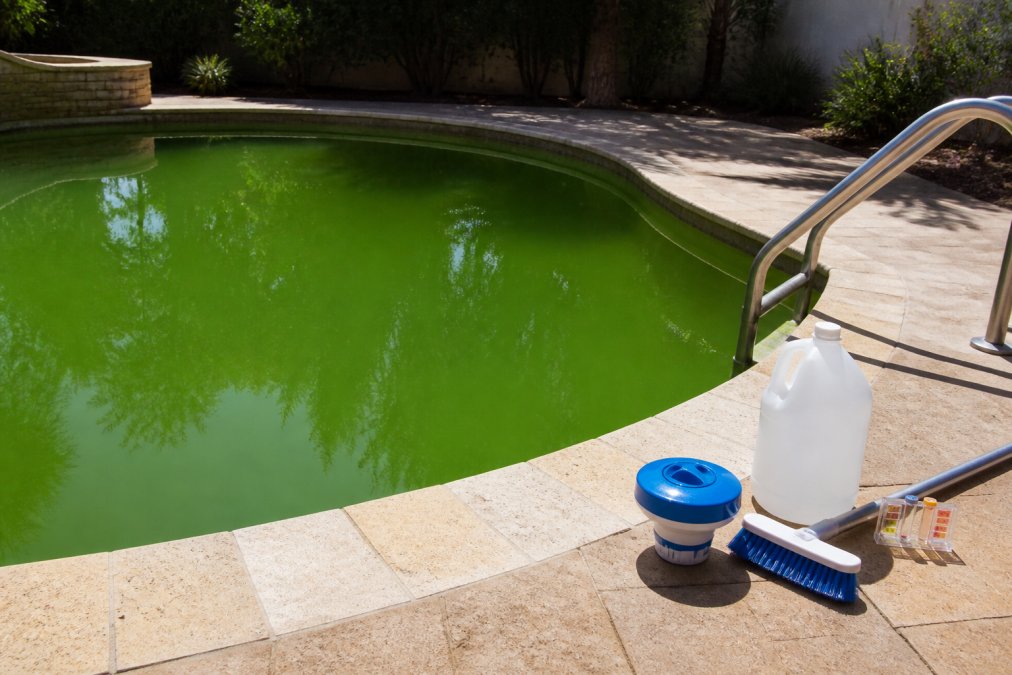
Green pool water is not a mystery. It is algae, and green pool water means your sanitizer stopped working before the algae arrived.
Common causes:
- Cyanuric acid too high. This is the stabilizer that protects chlorine from sunlight. Past a certain level, it locks chlorine up so it cannot kill algae.
- Filter breakdown. A clogged or failing filter cannot clear dead algae, so the pool stays cloudy and green.
- Heavy debris load. Leaves and dirt eat up chlorine as they break down.
- A long gap between cleanings. Pools that sit untreated for a week or more after storms almost always turn.
Test the Water First: Chemistry Before Chemicals
What to check:
- Free chlorine. This is the active sanitizer. If it reads zero, algae is winning.
- Combined chlorine. This is used-up chlorine. High combined chlorine means you need to shock.
- pH levels. Chlorine works best in a narrow range. Off-balance pH wastes your chemicals.
- Total alkalinity. This buffers pH so it does not swing wildly.
- Cyanuric acid. Too high and chlorine stops working. This is the most overlooked number.
Write your numbers down. You will compare them after treatment to confirm the water is actually balanced, not just clear.
How to Shock a Pool to Kill Algae and Restore Clarity
Shocking a pool means raising free chlorine high enough to kill algae and burn off contaminants in one push. For green water, this is the main event.
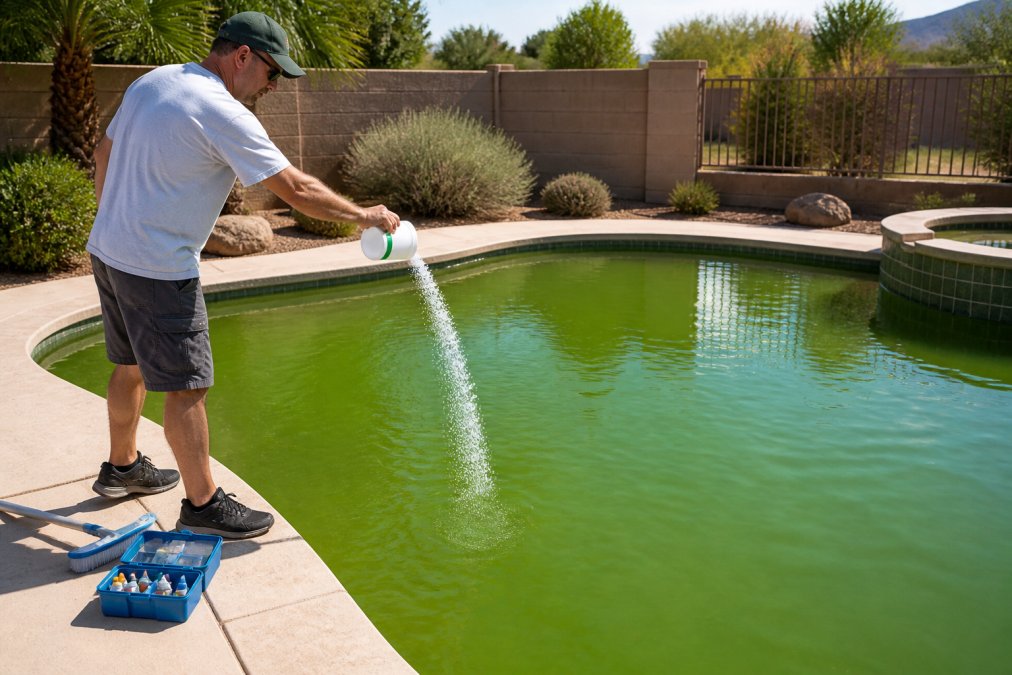
- Test first. Note your free chlorine and cyanuric acid levels.
- Brush the walls and floor. Algae hides in corners and steps. Brushing exposes it to the chlorine.
- Run the pump. Circulation spreads the shock through the whole pool.
- Add the shock. Use calcium hypochlorite or liquid chlorine. Follow the label dose for your pool size.
- Shock at dusk. Sunlight destroys chlorine. Evening dosing gets more of it into the water.
- Run the pump overnight. This keeps the chlorine moving and filtering.
- Retest in the morning. If chlorine dropped to zero, the algae ate it. Shock again.
How Long to Run Pool Pump for Green Water (and Why It Matters)
Run your pump 24 hours a day until the water clears, yes, around the clock. It is one of our most common questions, and the answer surprises people.
A few things to watch:
- Water circulation. Aim your return jets to push water around the pool, not straight down.
- Skimmer basket. Empty it often. A full basket chokes flow.
- Filter pressure. Rising pressure means the filter is loading up. Time to clean it.
The Best Pool Algaecide for Green Water: Types and Timing
The best pool algaecide for green water is a backup, not a replacement for shock. It prevents regrowth but does not clear a swamp on its own, so using it first wastes money and delays the real fix.
The three main algaecide types
- Copper-based (copper sulfate or chelated copper). The strongest option for active blooms. Copper disrupts algae cell function directly. Trade-offs: it can stain plaster and gunite a blue-green tint, and it can turn light-colored hair green if copper levels climb. Most labels target a copper concentration around 0.2 to 0.4 ppm for treatment, stay at or below the label maximum. Do not use it in a pool you also treat with a copper ionizer, and do not combine it with a big shock dose in the same hour, because high chlorine plus copper accelerates staining.
- Quaternary ammonium ("quat"). Cheap, gentle on surfaces, and effective as a weekly maintenance dose. Weak against a heavy bloom, and it foams at high doses. Quats also contribute to chlorine demand, so they are a poor fit mid-shock. Best used as a preventative after the water is clear.
- Polymer-based (often labeled "clarifier" or "flocculant"). Does not kill algae. It binds fine suspended particles, including dead algae, into larger clumps your filter can catch. This is the product that actually helps the day after a shock, when the water is milky green rather than swamp green.
Timing matters more than brand
A common pattern that works:
- Night 1: Brush, then shock to your target free chlorine level.
- Morning after: Retest. If free chlorine held above your minimum, the bloom is dying. If it crashed to zero, shock again that night.
- Once the water turns from green to cloudy blue-white: Add a polymer clarifier and keep the pump running 24/7. This is when the filter does its job.
- Once the water is clear: Add a maintenance dose of quat or copper-based algaecide at the label's preventative rate, typically once a week, to stop regrowth.
Dosing and cost trade-offs
Match the dose to your pool volume and follow the label. More is not better, and with copper, more can be permanent.
Brush, Vacuum, and Backwash: Mechanical Removal That Makes Chemicals Work
Chemicals kill algae; your hands and filter remove it. Skip the mechanical work and you will fight the same bloom twice.
A simple order of operations:
| Step | What It Does | When to Do It |
|---|---|---|
| Brush surfaces | Loosens algae for chlorine | Before shocking |
| Shock the pool | Kills algae | At dusk |
| Run pump 24/7 | Circulates and filters | Until clear |
| Vacuum to waste | Removes dead algae | Once water starts clearing |
| Backwash filter | Clears trapped debris | When pressure rises |
Filter-Specific Troubleshooting for Stubborn Green Water
If your chemistry is right and the water still will not clear, the filter is usually the problem. Most guides skip this step, and it is where a green-to-clear job either finishes in three days or drags on for two weeks.
Sand filters
Sand filters catch particles down to roughly 20 to 40 microns, which is why they are the slowest to clear dead algae. Two failure modes matter:
- Channeling. Water carves paths through the sand bed instead of filtering through it. The gauge reads low or normal, but the water stays cloudy. Fix: perform a deep clean by removing the top inch of sand, or replace the sand entirely. Sand typically needs replacement every 5 to 7 years.
- Clogging. The gauge climbs fast and stays high even after a backwash. Fix: backwash until the sight glass runs clear, then rinse for 30 seconds. If pressure stays high, the sand is calcified or gummed with oils and needs replacement.
Cartridge filters
Cartridge filters catch particles down to roughly 10 to 15 microns, so they clear dead algae faster than sand but load up quickly. A single heavy bloom can coat a cartridge in hours.
- Symptom: pressure climbs 8 to 10 psi above baseline within a day of cleaning.
- Fix: pull the cartridge, hose it top-down with a nozzle, and inspect the pleats. If the pleats stay matted or discolored after cleaning, replace the cartridge. Most cartridges last one to three seasons depending on load.
- Pro move: keep a spare cartridge on hand during a green-to-clear so you can swap, clean, and keep the pump running without downtime.
DE (diatomaceous earth) filters
DE filters catch particles down to 2 to 5 microns, the finest of the three, making them the best choice for polishing dead algae out of the water. They also fail the fastest if you skip a step.
- The critical step: every time you backwash a DE filter, you must add fresh DE back through the skimmer, typically 1 pound per 10 square feet of filter area, or the amount the manufacturer specifies on the tank label. Skip this and the grids run bare, the filter stops catching fines, and the water stays hazy.
- Symptom of a torn grid: DE blows back into the pool and settles as a white powder on the floor. Fix: open the tank, inspect the grids, and replace any with tears.
- During a green-to-clear: expect to backwash and re-charge DE every 24 to 48 hours until the water clears.
What the water color tells you
- Clear water with a green tint usually means dead algae still suspended in the pool. The filter is not catching fine particles, switch to a polymer clarifier or, if you have a DE filter, verify the DE charge.
- Cloudy white or gray water usually means the filter is catching particles but flow is too low to cycle the full volume. Check the gauge, backwash, and confirm the pump is running 24/7.
- Water that clears then goes green again within a day means the bloom is not fully dead. Retest free chlorine at dusk; if it reads zero, shock again.
If you have worked through the gauge readings, backwash cycle, and media check and the water still will not clear, the filter media is likely past its service life. Replacing sand, a cartridge, or DE grids is often cheaper than another week of chemicals.
Conclusion: Your Green-to-Clear Action Plan
Fixing a green pool is a sequence, not a single product. Test the water, shock at dusk, run the pump around the clock, and remove dead algae by hand. Then watch your filter, that is where most stubborn pools get stuck.
Frequently Asked Questions
How long does it take to recover a green pool?
Most green pools clear within 24 to 72 hours if you shock with the right dose, run the pump continuously, and brush daily. Dense algae blooms or high cyanuric acid can stretch it to 4 or 5 days. Test free chlorine and combined chlorine each morning; when free chlorine holds overnight and the water turns milky blue, you are on track. Keep filtering until the water is clear enough to see the main drain.
Can you fix a green pool without draining?
Yes, most green pools can be recovered without draining. The exception is when total dissolved solids are extremely high or cyanuric acid is above 80 ppm, which locks up chlorine. In those cases, a partial drain and refill may be faster. For typical algae blooms, a shock treatment paired with brushing, vacuuming to waste, and continuous filtration restores clarity. If the pool has not been serviced in months, a professional assessment can confirm whether draining is necessary.
Do I need to shock my pool if it is green?
Yes. Green water means algae is consuming your free chlorine faster than the system can replace it. A single shock treatment raises free chlorine high enough to oxidize algae and combined chlorine. Use calcium hypochlorite or liquid chlorine, and dose based on your test kit reading rather than a guess. If the pool is very green, you may need two or three shock treatments spaced 12 hours apart, with brushing between each one.
What is the fastest way to clear up a green pool?
The fastest method combines three actions: shock with a high dose of chlorine, run the pump 24 hours a day, and brush every surface to lift algae into the water column. Add a sequestering agent if metals are present, and vacuum to waste instead of recirculating debris through the filter. Backwash or clean the filter when pressure rises 8 to 10 psi above the clean reading. This approach typically clears a moderately green pool in 1 to 2 days.