 how-to
How to Clean Exterior Windows: A Step-by-Step Guide
Table of Contents
- Step 1: Gather the Right Exterior Window Cleaning Tools
- Step 2: Mix Your Cleaning Solution and Prep the Glass
- Step 3: Scrub, Rinse, and Squeegee for a Streak-Free Finish
- How to Clean Outside Windows Without Streaks
- The Best Way to Clean High Exterior Windows Safely
- How Often to Clean Exterior Windows
- When to Call a Professional Window Cleaner
- Frequently Asked Questions
Last Updated: October 15, 2026
Step 1: Gather the Right Exterior Window Cleaning Tools
The right tools to clean exterior windows make the job faster and the results better. Most homeowners already own half of what they need. You can pick up the rest at any hardware store for a modest cost.
Here is the basic kit:
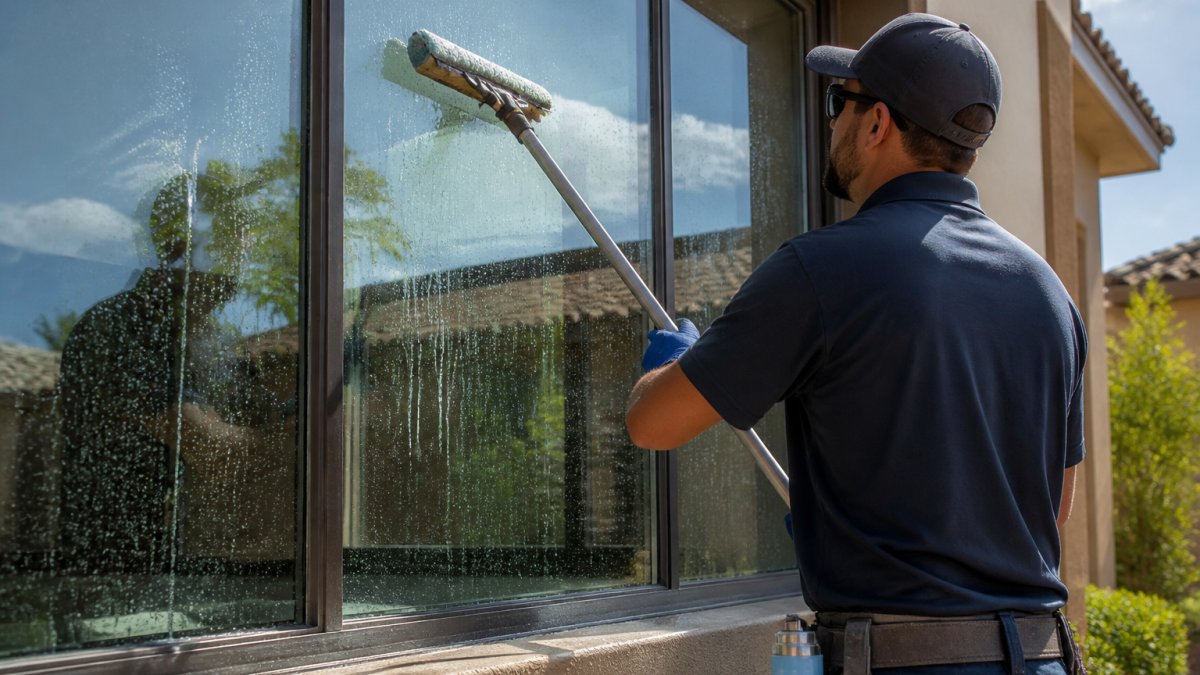
- A telescoping extension pole with interchangeable cleaning heads
- A scrubber or cleaning pad that attaches to the pole
- A squeegee with a sharp silicone blade
- A bucket
- A hose with a spray nozzle
- Microfiber cloths or towels
- Mild dish soap
For ground-floor glass, a simple squeegee and cloth will do. For high windows, an extension pole saves you from dragging out a ladder. Look for a pole that locks at different lengths so you can reach second-story panes without overextending yourself.
What most guides miss is the squeegee blade itself. A worn or nicked blade leaves streaks no matter how good your technique is. Replace it when it starts skipping across the glass.
Step 2: Mix Your Cleaning Solution and Prep the Glass
A simple mix of warm water and a few drops of mild dish soap handles most exterior window cleaning jobs. Skip the harsh cleaners. Strong chemicals can strip window frames and leave a film that attracts more dirt.
Follow these prep steps before you wet anything:
- Brush loose dirt and cobwebs off the frames and sills
- Rinse the glass with a hose to knock off dust and pollen
- Remove screens and set them aside for separate cleaning
- Check for cracks or loose glazing before you scrub
That rinse step matters more than people think. If you scrub dry glass, grit acts like sandpaper and can scratch the surface. A quick hose-down removes the abrasive stuff first.
Water quality also plays a role. Hard water leaves mineral spots when it dries. If your tap water is hard, dry the glass quickly with a microfiber towel, or use a squeegee before the water has a chance to evaporate.
Step 3: Scrub, Rinse, and Squeegee for a Streak-Free Finish
Scrub first, rinse second, squeegee last. That order is what separates a clean window from a streaky one.
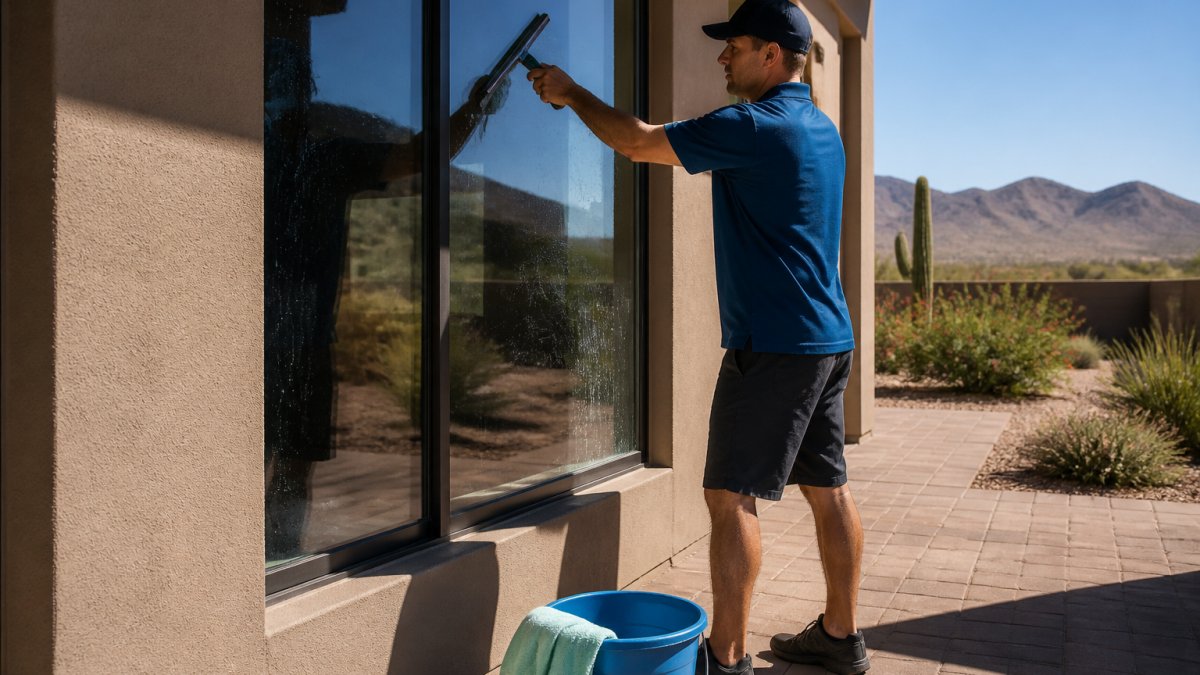
Wet the glass with your soapy solution. Use the scrubber or cleaning pad to loosen dirt, pollen, and bug residue. Work in small circles and cover the whole pane. Don't let the soap dry on the glass.
Rinse the soap off with clean water from your hose. Then pull the squeegee across the glass in smooth, overlapping strokes. Wipe the blade with your cloth after each pass.
For the best results:
- Start at the top corner and pull down in one steady motion
- Overlap each stroke by about an inch
- Dry the edges and sill with a microfiber cloth
- Work in the shade when you can, since direct sun dries the glass too fast
How to Clean Outside Windows Without Streaks
Streaks come from three things: dirty water, a dull blade, or cleaning in direct sun. Fix those and the glass dries clear.
The most common mistake is reusing soapy water until it turns gray. Dirty water just redeposits film on the glass. Dump it and mix a fresh batch when it starts looking cloudy.
Here is a quick troubleshooting table:
| Problem | Likely Cause | Fix |
|---|---|---|
| Streaks after drying | Dirty water or worn blade | Fresh solution, new squeegee blade |
| Spots that won't wipe off | Hard-water minerals | Vinegar soak, then rinse and dry fast |
| Smears across the pane | Too much soap | Cut back to a few drops |
| Lint left behind | Paper towels | Switch to microfiber cloths |
| Film returns fast | Cleaning in full sun | Work early morning or evening |
A microfiber cloth is the last line of defense. Buff the edges and corners where the squeegee can't reach. That final wipe is what gives you a truly streak-free finish.
The Best Way to Clean High Exterior Windows Safely
Safety comes before speed when you're cleaning high windows. Falls from ladders are one of the most common home injuries, and no clean pane is worth that risk. The gap most guides leave is the how, not just "be careful," but the specific reach limits, ladder mechanics, and glass conditions that decide whether you should be up there at all.
Know your reach limit before you climb
A telescoping pole changes the math. Standing on the ground, most people can comfortably control a pole up to about 20 feet of vertical reach; beyond that, the pole flexes, the head wanders off the glass, and you start leaning, which is exactly when falls happen. As a working rule:
- Ground floor: pole or ladder, your choice.
- Second story: extension pole from the ground. Skip the ladder unless the pole genuinely can't reach.
- Third story and up: call a professional. The risk-to-reward stops making sense.
If you do use a ladder
Ladder placement is where most home injuries start. A few mechanics matter more than the rest:
- Set the ladder on firm, level ground, never on grass, gravel, or a slope without a leveling foot.
- Use the 4-to-1 rule: for every 4 feet of working height, the base sits 1 foot out from the wall. A ladder reaching 16 feet should have its feet about 4 feet from the house.
- Extend the ladder so it clears the roof line or working surface by at least 3 feet, giving you something to hold when you step off.
- Lock every joint and confirm the spreaders are fully seated before you climb.
- Keep three points of contact, two hands and one foot, or two feet and one hand, at all times.
- Never lean or overreach to the side. Climb down, move the ladder, climb back up. It's slower and it's the whole point.
- Have someone spot you, especially on uneven ground.
Fragile and specialty glass
Older homes often have single-pane or storm windows that flex under pressure. Never press a scrubber or squeegee hard against a pane you can feel give. On storm windows, clean the inner and outer sash separately rather than trying to reach through. If a pane is cracked, loose in its glazing, or visibly bowed, stop, cleaning it can turn a small repair into a broken window.
When to hand it off
Call a professional when windows sit three or more stories up, when your property has no safe ladder footing, when glass shows hard-water or mineral buildup that needs more than soap, or when frames and screens need deep cleaning. The OSHA ladder safety guidance spells out why the threshold matters: falls remain a leading cause of serious injury on home projects, and the guidance applies to any ladder work you do yourself.
How Often to Clean Exterior Windows
Most homes need exterior windows cleaned two to four times a year. That range is a starting point, not a rule, the right frequency depends on what's landing on your glass. The gap most guides skip is why the number moves, and what to look for so you clean on condition rather than on the calendar.
What actually drives the schedule
- Nearby trees. Pollen in spring and sap or honeydew in summer can coat glass within days. Homes under or near mature trees often need monthly passes during peak season.
- Traffic and road exposure. Road film and tire dust build a gray haze on windows facing a busy street. Those panes typically need cleaning more often than the back of the house.
- Sprinkler overspray. Irrigation water hits glass and dries in place, leaving mineral spots that get harder to remove the longer they sit. If a sprinkler head reaches a window, expect spotting after every cycle.
- Hard water. If your tap water leaves spots on a rinsed glass, your windows will show the same deposits. Drying fast with a squeegee or microfiber towel after every wash keeps them from setting.
- Pollen season. In dusty, dry regions, pollen can coat glass in a yellow film within days. Plan extra cleanings during that stretch rather than waiting for the next season.
- Exposure. South- and west-facing glass takes more sun and dries faster, which can bake on residue. Shaded sides stay wetter and grow film more slowly.
A condition-based schedule
Instead of a fixed four-season plan, check your glass and clean when you see one of these:
- A visible haze or film when you look across the pane at an angle
- Water spots that don't wipe off with a dry cloth
- Pollen, sap, or bug residue you can feel with a fingertip
- Sprinkler overspray after a watering cycle
A quick pass each season keeps windows clear and makes each job easier. Seasonal maintenance beats one big scrub-down, and it's the cheapest way to avoid the mineral buildup that turns a routine wash into a restoration job.
Water use and runoff
The U.S. Environmental Protection Agency's water efficiency tips note that rinsing with a hose uses a lot of water. A bucket-and-squeegee method cuts waste and still gets glass clean. If you're cleaning near garden beds, lawns, or potted plants, rinse the runoff away from roots or use a mild soap-and-water mix, most dish soaps are gentle enough that a diluted bucket won't harm landscaping, but concentrated runoff can stress plants. Keep soapy water out of storm drains where you can, and let plain rinse water do the heavy lifting on the final pass.
When to Call a Professional Window Cleaner
Some jobs are worth handing off. If your windows are above the first floor, hard to reach, or covered in years of mineral buildup, a pro saves you time and risk.
Call a professional when:
- Windows sit three or more stories up
- Ladders feel unsafe on your property
- Glass has hard-water stains or mineral deposits
- Frames or screens need deep cleaning
- You simply don't have the time
At Task Genie, we handle exterior window cleaning for homes and businesses. We use professional-grade equipment and premium products, and we back every job with a 100% satisfaction guarantee. You get crystal-clear, streak-free windows without lifting a finger.
Frequently Asked Questions
What is the best squeegee for cleaning exterior windows?
A squeegee with a soft silicone blade and an ergonomic handle works best for exterior windows. Silicone blades glide smoothly and resist nicking, which helps prevent streaks. For high windows, choose a squeegee that attaches to a telescoping pole. Look for a model with a sturdy brass or stainless steel channel that holds the blade firmly. Avoid cheap plastic squeegees that warp in the sun.
Can I use dish soap to clean my windows?
Yes, a few drops of mild dish soap in a bucket of warm water is a common DIY solution. Too much soap leaves a film that attracts dirt and causes streaks. Use no more than a teaspoon per gallon of water. For hard-water spots, add a splash of white vinegar. Rinse thoroughly with clean water before squeegeeing. If you have hard water, consider a professional window cleaner who uses purified water.
How do you clean high-up outside windows safely?
For high exterior windows, use a telescoping pole with a scrubber and squeegee attachment. This lets you clean from the ground, avoiding ladder risks. If you must use a ladder, place it on level ground, maintain three points of contact, and never overreach. For second-story windows or higher, hire a professional window cleaner. They have the right equipment and insurance to work safely at height.
How often should you clean exterior windows?
Most homes need exterior window cleaning two to four times per year. In dusty areas, monthly or quarterly cleaning keeps glass clear of dust and pollen. Commercial properties may need more frequent service. Signs it's time include visible dirt, water spots, or reduced clarity. Regular cleaning also prevents hard-water stains from becoming permanent.
Cleaning exterior windows yourself is doable, but it takes the right tools, a good technique, and a safe setup. For high windows, stubborn mineral stains, or a schedule you'd rather not manage, Task Genie is here to help. Our team brings professional-grade equipment, reliable scheduling, and a commitment to never cutting corners, all backed by our 100% satisfaction guarantee. Get a free quote from Task Genie and enjoy crystal-clear views without the hassle.