 how-to
How to Clean High Windows Safely: A Step-by-Step Guide
Table of Contents
- Assess Your Safety Before You Start
- Gather Your Tools and Materials
- Using a Window Cleaning Pole to Reach High Windows
- How to Clean Windows Without a Ladder
- Best Window Cleaner for High Windows
- How to Clean Second-Story Windows Safely
- Step-by-Step Window Cleaning Process
- Common Mistakes to Avoid
- Frequently Asked Questions
Last Updated: October 9, 2026
Assess Your Safety Before You Start
Before you touch a window, evaluate the hazards. This is the most important step, and the one most people skip.
High windows present real risks. Falls are the leading cause of unintentional injury-related deaths in the home, and the higher the window, the greater the danger. Decide whether you can safely clean it yourself or need professional help.
Identify hazards and access limitations
Start by asking yourself these questions:
- Can I reach the window from the ground or a low step without stretching beyond my balance point?
- Is there stable, level ground to stand on?
- Are there power lines, gutters, or other obstacles near the window?
- Is the window on a roof, peak, or angled surface?
- Can I safely position a ladder without it slipping or tipping?
If you answered "no" to any of these, stop. You've identified a hazard that makes DIY cleaning unsafe, and pushing past warning signs is where many homeowners get hurt.
High windows that require climbing more than one story, reaching from a roof, or working near electrical lines are not DIY jobs. Period.
Know when to stop and call a professional
Your safety is worth more than the cost of professional cleaning. Call someone like Task Genie when you see:
- Windows on the second story or higher
- Windows accessible only by climbing a steep roof
- Windows near power lines or electrical hazards
- Windows in hard-to-reach corners or tight spaces
- Any situation where you'd need to stretch, balance, or reach beyond your comfortable range
- Weather conditions: wind, rain, ice, or extreme heat
Professional window cleaners have insurance, equipment, and training you don't have, and they know how to work safely at heights. The peace of mind is worth it.
Gather Your Tools and Materials
You need the right tools to clean high windows safely, and learning how to clean high windows safely and effectively prevents rushing and speeds up the job. Having everything ready prevents rushing and speeds up the job.
Here's what you'll need:
- Telescopic pole or extension pole (8-20 feet depending on window height)
- Window cleaning solution (commercial cleaner or vinegar and water mix)
- Sponge or soft brush attachment for the pole
- Squeegee (18-24 inches wide) attached to the pole
- Bucket for mixing solution
- Spray nozzle for the hose
- Microfiber cloth for drying and detail work
- Gloves to protect your hands
- Safety glasses to keep water and solution out of your eyes
- Step stool or low ladder (only if reaching from ground level)
The telescopic pole is your main tool for reaching high windows without climbing. A good pole extends 15-20 feet and lets you work from the ground. Cheap poles wobble and break.
For cleaning solution, you have two options. Commercial cleaner works fast and leaves a streak-free finish, while a mix of 1 part vinegar to 3 parts water handles light dirt for almost nothing.
Using a Window Cleaning Pole to Reach High Windows
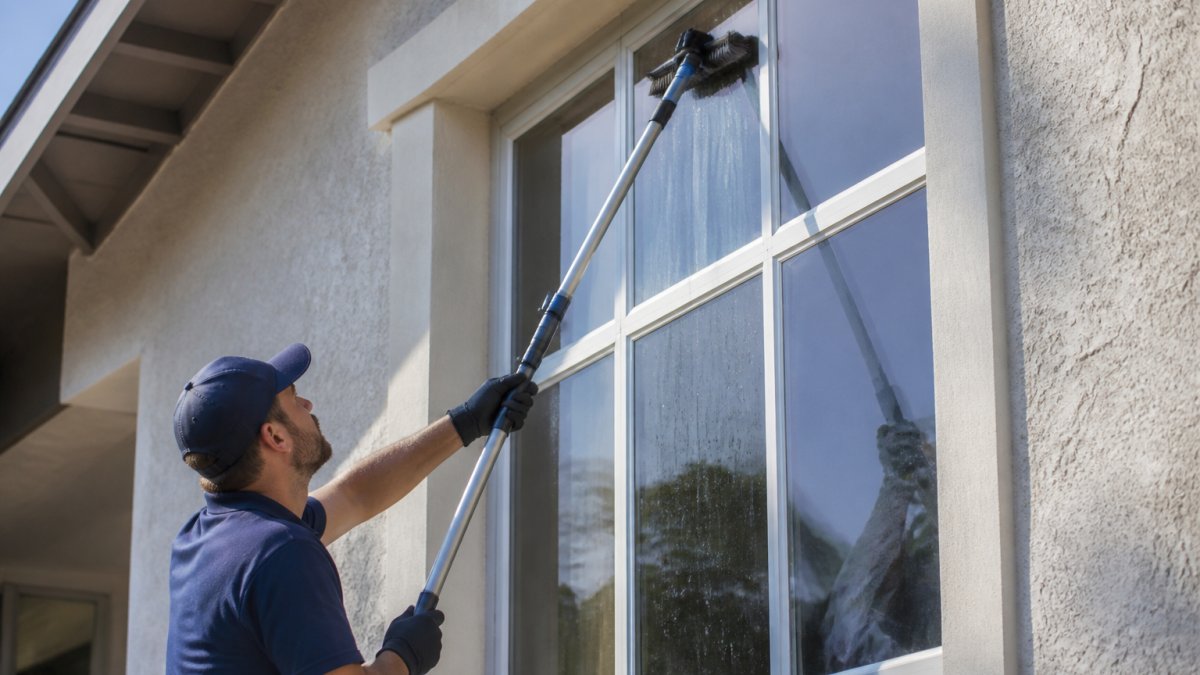
A window cleaning pole is your safest option for reaching high windows without a ladder, letting you work from stable ground.
The setup is simple: the pole screws into a handle at the bottom, attachments thread onto the top, and you control everything from ground level.
Let the solution sit for 30 seconds to break down dirt, then scrub gently. The solution does the work, not force.
After scrubbing, switch to the squeegee attachment.
The key to a streak-free finish is removing all the water before it dries into spots, which is why the squeegee is essential.
How to Clean Windows Without a Ladder
Not every high window requires a ladder. Many second-story windows can be cleaned safely from the ground using the right technique and tools.
Ground-based washing with hose and pole
This method works best for windows that are 12-20 feet high and have a clear view from the ground below.
Attach your sponge or brush to the telescopic pole, mix your solution, and apply it generously so it covers the entire window surface.
Once scrubbed, rinse with a hose spray nozzle on medium, not a hard jet that could damage glass or push water into cracks, starting at the top and working down.
After rinsing, use the squeegee attachment to remove standing water, the critical step that prevents water spots.
Interior cleaning for second-story windows
If you have second-story windows that open, you can clean the outside from inside your home, one of the safest methods for high windows.
Open the window fully and lean out just far enough to reach the outside glass, staying well within the frame. If you can't reach comfortably, don't try.
Wash the outside glass in sections with a sponge or cloth and solution, rinse with a spray bottle of clean water, and dry with a microfiber cloth.
This works only for windows you can safely open and reach from inside.
Best Window Cleaner for High Windows
The cleaning solution you choose affects how fast the job goes and how good the results look.
Commercial window cleaners cut through dirt, hard water stains, and grime quickly, leaving a streak-free finish. The advantage is speed; the downside is cost and chemicals.
Vinegar and water is the budget option: mix one part white vinegar with three parts water in a spray bottle.
For professional window cleaning, premium commercial solutions combined with professional-grade squeegees and poles are often used. The difference in tools and technique is why professional results often look so much better than DIY attempts.
For high windows, use commercial cleaner for hard water stains or heavy buildup, and vinegar and water for routine cleaning.
How to Clean Second-Story Windows Safely
Second-story windows require extra caution because a fall would be serious. Before you start, use the safest method available to you.
Ladder setup and fall prevention
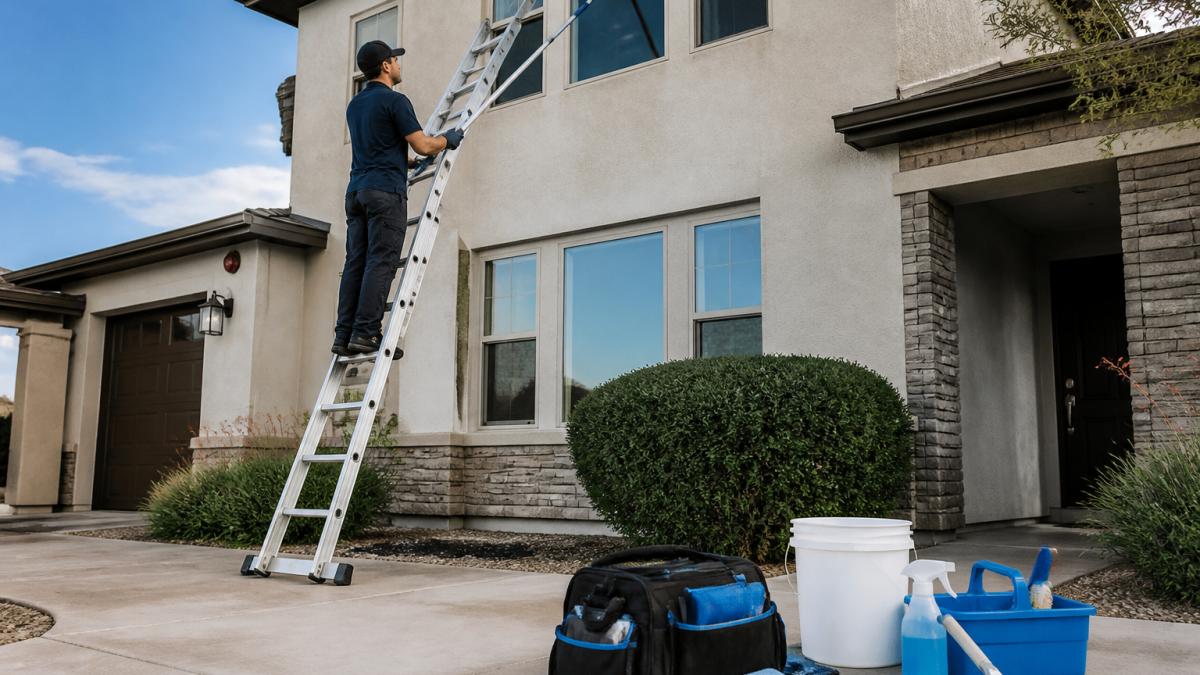
If you must use a ladder for a second-story window, set it up correctly. This is non-negotiable.
Place the ladder on flat, level ground.
Position the ladder at the right angle: the base about one-quarter of the ladder's length from the wall (5 feet for a 20-foot ladder).
Secure the top of the ladder if possible by tying it off or having someone hold it.
Wear shoes with good grip, climb slowly, and keep three points of contact at all times.
Never stand on the top two rungs, where your balance is compromised.
Personal protective equipment and weather considerations
Wear gloves to protect against sharp glass edges and chemicals, and safety glasses to keep water and solution out of your eyes. Read commercial cleaner labels, as some require additional protection.
Check the weather first. Don't clean when it's windy, since ladders become unstable, or in direct sun, where solution dries too fast and leaves streaks. Overcast days or early morning are ideal, and rain should be avoided because wet windows are slippery and rain undoes your work.
Temperature matters too: freezing weather turns water on glass to ice, and extreme heat dries solution before you can squeegee. Mild temperatures between 50 and 75 degrees are best.
Step-by-Step Window Cleaning Process
Follow this process for consistent, streak-free results every time.
Step 1: Prepare your workspace and protect surroundings
Before you touch a window, prepare the area below. Move plants, furniture, and anything else water or solution could damage, and close open windows on lower floors so runoff doesn't come in.
If you're using a ladder, clear the area around the base so you don't trip while climbing.
Lay a tarp or old towel under the window to catch drips, protect landscaping, and ease cleanup.
Step 2: Apply cleaning solution to glass
Fill your bucket or spray bottle with cleaning solution and dip your sponge or brush attachment in.
Apply the solution generously to the entire window surface, starting at the top and working down. Thin coverage won't cut through dirt effectively.
Let the solution sit for 30-60 seconds to break down dirt and grime, but don't let it dry on the glass, where it becomes harder to remove and leaves streaks.
Step 3: Scrub with a brush or sponge
Use gentle pressure. You're loosening dirt with the solution, not scraping the glass.
Work in circular or back-and-forth strokes over the entire surface, paying extra attention to corners and edges where dirt accumulates.
For stubborn spots, let the solution sit longer before scrubbing. Time and chemistry help; pressure doesn't.
Step 4: Rinse thoroughly and remove water
This is where most people make mistakes: rinsing too quickly or not completely.
Rinse the entire window with clean water on a medium spray setting, starting at the top and working down. Leftover soap dries into streaks.
After rinsing, squeegee off standing water, the most important step for avoiding streaks. Start at the top corner, pull straight down in one smooth motion, and keep the blade at a slight angle, not flat against the glass.
Wipe the squeegee blade with a dry cloth between strokes so water doesn't drip back onto the glass.
Step 5: Dry and finish with a squeegee or cloth
After squeegeing, dry any remaining droplets with a microfiber cloth, which absorbs water without lint or streaks.
Work top to bottom, paying special attention to edges and corners where water collects. This final step separates a clean window from a professional-looking one.
For interior windows, skip the squeegee and use a microfiber cloth. For exterior windows, the squeegee is essential because you can't reach all the water with a cloth.
Common Mistakes to Avoid
Learning from others' mistakes saves you time, frustration, and safety risks.
Skipping the safety assessment. This is the biggest mistake.
Using the wrong ladder angle. Too steep tips backward; too shallow slides out.
Cleaning in direct sun. Solution dries too fast and leaves streaks.
Not rinsing completely. Leftover soap dries into streaks.
Skipping the squeegee. This is how water spots form.
Using too much pressure. Scrubbing hard doesn't clean better, it just wears out your arms.
Ignoring wind. Windy days make ladders unstable and push water around unpredictably. Wait for calmer weather.
Cleaning high windows safely comes down to honest assessment and the right tools. If you're uncomfortable with ladders, the window is very high, or you're near power lines, professional window cleaning is the smart choice. Task Genie brings professional-grade equipment and trained technicians to the job, cleaning second-story windows, exterior glass, and hard-to-reach windows most homeowners can't safely tackle alone.
Frequently Asked Questions
What is the safest way to clean second-story windows?
The safest approach avoids climbing whenever possible. Use a telescopic pole with a brush and squeegee attachment from the ground, or clean interior windows from inside your home. If you must use a ladder, secure it to the wall, maintain three points of contact, wear a safety harness rated for fall protection, and have someone spot you. Never overreach or lean sideways. Consider hiring a professional if your home is over one story or windows are difficult to access.
How can you clean high windows without a ladder?
A telescopic pole or extension pole is your best option. These poles extend 15 to 30 feet and attach to brushes, squeegees, and scrubbers, allowing you to wash exterior glass from the ground. You can also rinse windows with a spray nozzle attached to a garden hose. For interior windows on upper floors, open the window and clean from inside. This ground-based method eliminates fall risk and is suitable for most residential windows.
What is the best window cleaner for high windows?
A simple solution of equal parts white vinegar and water works well for most glass. For stubborn residue, use a commercial glass cleaner designed for exterior use. Avoid products that leave streaks or require excessive rinsing. Apply the solution with a brush or sponge attached to your pole, let it sit briefly to break down dirt, then scrub gently. Rinse thoroughly with clean water from a hose to prevent water spots and soap residue.
When should you hire a professional to clean high windows?
Hire a professional if your home is more than two stories, windows are inaccessible or blocked by obstacles, you lack proper equipment, or you have mobility concerns. Professionals have specialized equipment, insurance, and fall-protection training that makes the job faster and safer. They also handle difficult surfaces like skylights and hard-to-reach exterior glass. A professional service is worth considering if the task feels uncomfortable or risky.