 ultimate-guide
Residential Pool Maintenance Checklist 2026: Weekly Guide
Table of Contents
- Your Residential Pool Maintenance Checklist for 2026: The Weekly Routine
- Pool Water Testing and Chemical Balance: Exact Ranges and Fixes
- Pool Filter Cleaning Schedule: Backwashing, Cartridge Care, and Pressure Checks
- Skimming, Brushing, and Vacuuming: How to Clean the Pool Surface and Floor
- How to Fix Green Pool Water: A Step-by-Step Recovery Plan
- Monthly, Seasonal, and Annual Pool Maintenance Tasks
- Troubleshooting by Symptom: Cloudy Water, Algae, and Equipment Issues
- Safety and Chemical Handling for Pool Owners
- Frequently Asked Questions
Last Updated: October 5, 2026
Your Residential Pool Maintenance Checklist for 2026: The Weekly Routine
A residential pool maintenance checklist 2026 splits into two rhythms: a five-minute daily pass and a deeper weekly walkthrough. Skip the daily checks and the weekly work doubles.
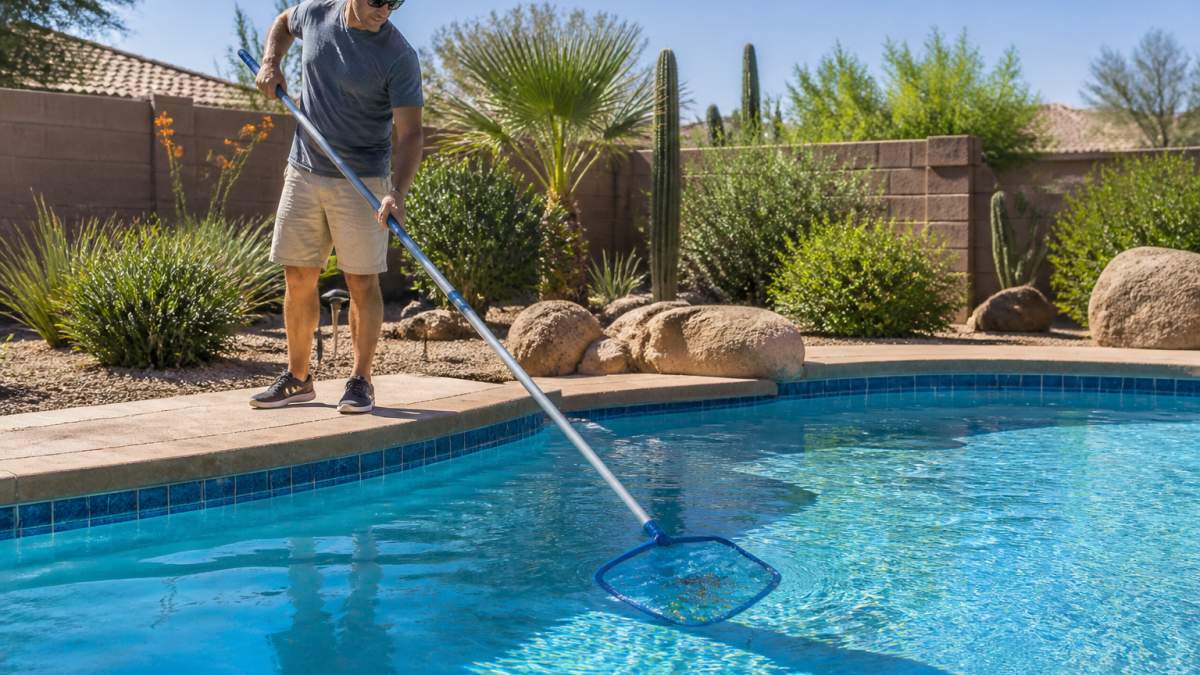
Daily Quick Checks (5 Minutes)
Daily maintenance is about catching problems before they compound. Run through five items each day:
- Skim the surface. Remove leaves and surface debris with a leaf skimmer before they sink and decay.
- Empty the skimmer basket. A full basket starves the pump of water.
- Check the pump basket. Debris here restricts water circulation.
- Confirm the pump is running. Listen for the usual hum and check the pressure gauge.
- Eyeball the water level. It should sit mid-way up the skimmer opening.
The Weekly Walkthrough: 10 Tasks That Keep Water Clear
The weekly pool maintenance checklist takes about 45 minutes and covers everything the daily pass misses:
- Skim surface debris and empty the skimmer basket
- Empty the pump strainer basket
- Brush pool walls, steps, and waterline tile
- Vacuum the pool floor
Pool Water Testing and Chemical Balance: Exact Ranges and Fixes
Pool water testing and chemical balance is the single biggest driver of clear water. Test pH, total alkalinity, free chlorine, and calcium hardness, then adjust in the right order: alkalinity first, pH second, sanitizer last. Adjusting pH before alkalinity is stable wastes chemicals, because alkalinity buffers pH and will drag it back out of range.
What to Test and How Often
| Test | Target Range | Frequency |
|---|---|---|
| Free chlorine | 1-3 ppm | Daily to every other day |
| Combined chlorine | 0 ppm (shock at 0.5 ppm or higher) | Weekly |
| pH | 7.4-7.6 | Twice weekly |
| Total alkalinity | 80-120 ppm | Weekly |
| Calcium hardness | 200-400 ppm | Monthly |
| Cyanuric acid | 30-50 ppm | Monthly |
| Salt (saltwater pools) | 2,700-3,400 ppm | Monthly |
Corrective Actions for Out-of-Range Readings
High pH (above 7.6). Chlorine becomes less effective and scale forms.
Low total alkalinity (below 80 ppm). pH will swing wildly.
High total alkalinity (above 120 ppm). pH locks high and resists correction.
High free chlorine (above 3 ppm). Stop dosing and let it drift down.
High calcium hardness (above 400 ppm). Scale forms on tile, heater, and salt cells.
Reading the Water, Not Just the Numbers
Two pools can show identical test results and behave differently. Water temperature, bather load, sunlight, and rainfall all shift demand. A pool that tests perfect on Monday can be green by Thursday after a hot weekend with six swimmers. That is why the daily and weekly checks matter more than any single test result: trends tell you what is coming, and a single reading only tells you what already happened.
Pool Filter Cleaning Schedule: Backwashing, Cartridge Care, and Pressure Checks
The pool filter cleaning schedule depends on your filter type, but the trigger is always the same: filter pressure. Note the clean starting pressure when the filter is new or freshly cleaned. When the gauge reads 8-10 psi above that baseline, it is time to act. For sand and DE filters, that means backwashing. For cartridge filters, pull the cartridge and hose it down.
Skimming, Brushing, and Vacuuming: How to Clean the Pool Surface and Floor
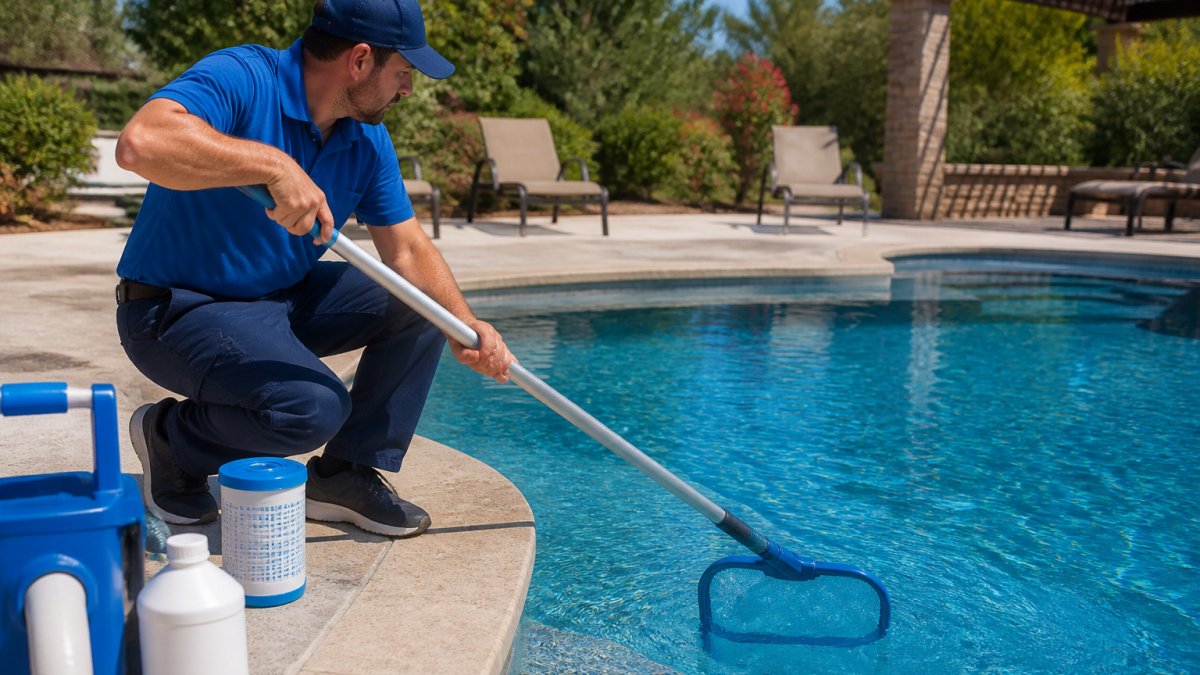
Cleaning the pool surface and floor comes down to three tools used in sequence. Skim first so debris does not sink while you work. Brush second, working from the shallow end toward the deep end and paying extra attention to waterline tile and steps, where oils and scale collect. Vacuum last, either with a manual vacuum head or a robotic cleaner.
How to Fix Green Pool Water: A Step-by-Step Recovery Plan
Green water is an algae bloom, and it is fixable without draining the pool in most cases. Here is the recovery sequence:
- Brush every surface. Algae clings to walls and floors; brushing breaks it loose so the filter can capture it.
- Remove large debris. Leaves and organic matter feed the bloom.
- Test and balance. Get pH and alkalinity in range before shocking, or the shock will not work efficiently.
- Shock the pool. Dose according to label instructions for your pool volume.
- Run the pump continuously. Circulation is what distributes the sanitizer.
- Re-test and repeat. Severe blooms may need a second shock 24 hours later.
- Clean the filter. Dead algae loads the filter fast; backwash or rinse when pressure climbs.
If the water stays green after two shock cycles with balanced chemistry, call a professional.
Monthly, Seasonal, and Annual Pool Maintenance Tasks
Most checklists stop at the week. The tasks that protect your equipment and your budget live on a longer clock, and skipping them is how a $60 part turns into a $900 repair. Use the calendar below to plan the full year. Adjust the seasonal timing to your local climate; in hot, sunny regions the spring ramp-up starts earlier and the fall slowdown comes later.
Monthly Tasks (About 60-90 Minutes)
- Test cyanuric acid (stabilizer). Target 30-50 ppm. If it climbs above 50 ppm from continued chlorine tablet use, the only reliable fix is partial drain and refill, because stabilizer does not evaporate or break down quickly.
- Test calcium hardness. Target 200-400 ppm. Low hardness pulls calcium out of plaster and grout; high hardness scales the tile line and heater.
- Inspect the pool surface. Walk the perimeter and look for cracks, rough plaster, or popped tile. Catch them small.
- Clean the waterline tile. Oils, sunscreen, and scale build a ring that brushing alone will not remove. A pumice stone or tile cleaner handles the mineral line.
- Check the pump timer and run hours. In warm months, most pools need 8-12 hours of filtration daily; cooler months need less. Confirm the timer still matches the season.
Seasonal Tasks
Spring ramp-up (before heavy use):
- Open the pool if it was covered, and remove and clean the cover.
- Deep-clean the filter: backwash sand or DE, or soak cartridge elements in filter cleaner.
- Rebalance the full chemistry panel, starting with alkalinity, then pH, then sanitizer.
- Shock the pool to clear winter buildup, then re-test before swimming.
- Inspect the pump, heater, and any salt cell for scale or wear.
Fall slowdown (as use drops):
- Clear leaves aggressively; decaying organic matter is the biggest off-season chemistry drain.
- Lower run time as water temperature falls, but do not stop circulation entirely in freezing-risk areas.
- Reduce or stop tablet feeding as temperatures drop, since cold water slows chlorine demand but stabilizer still accumulates.
- Decide whether you are closing the pool or running it year-round, and adjust the schedule accordingly.
Annual Tasks (Once a Year)
- Full equipment inspection. Pump seals, O-rings, unions, valves, and the heater. Replace worn seals before they leak.
- Filter media service. Replace sand every 5-7 years, DE grids as they tear, and cartridge elements every 1-3 years depending on load.
- Inspect pool lighting and wiring. Look for cracked lens gaskets, water intrusion, and damaged conduit. This is a job for a licensed electrician if anything looks compromised.
- Check the bonding and grounding. A qualified professional should verify this; it is a safety system, not a maintenance nicety.
- Review your chemical inventory. Discard anything caked, discolored, or unlabeled, and restock for the coming season.
Time and Cost Planning
Budget roughly 5 minutes daily, 45 minutes weekly, 60-90 minutes monthly, and a half-day each for spring opening and fall slowdown. Most of the cost is chemicals and filter media rather than labor. If you would rather hand off the monthly and seasonal work, that is the tier where professional service earns its keep; the daily and weekly tasks are the ones most homeowners can handle themselves with a skimmer, brush, vacuum, and test kit.
Troubleshooting by Symptom: Cloudy Water, Algae, and Equipment Issues
Cloudy water usually means filtration or chemistry is off, not that the pool needs draining. Check filter pressure first. If pressure is normal, test chemistry: high pH and low chlorine both cloud water. Algae points to low sanitizer, poor circulation, or high phosphates feeding the bloom. Equipment issues follow a pattern too: a pump that loses prime usually has an air leak or a low water level, while a pump that runs hot often has a clogged basket or strainer.
Safety and Chemical Handling for Pool Owners
Chemical safety is not optional. Store pool chemicals in a cool, dry, ventilated spot, away from gasoline, fertilizer, and other reactive materials. Post emergency numbers near the pool area, and follow the CDC guidance on healthy swimming and pool chemical safety for handling and storage standards. For water-quality benchmarks, the EPA's recreational water guidance is a useful reference, and the American Red Cross pool safety resources cover supervision and emergency response.
Frequently Asked Questions
What are the must-haves for a pool in 2026?
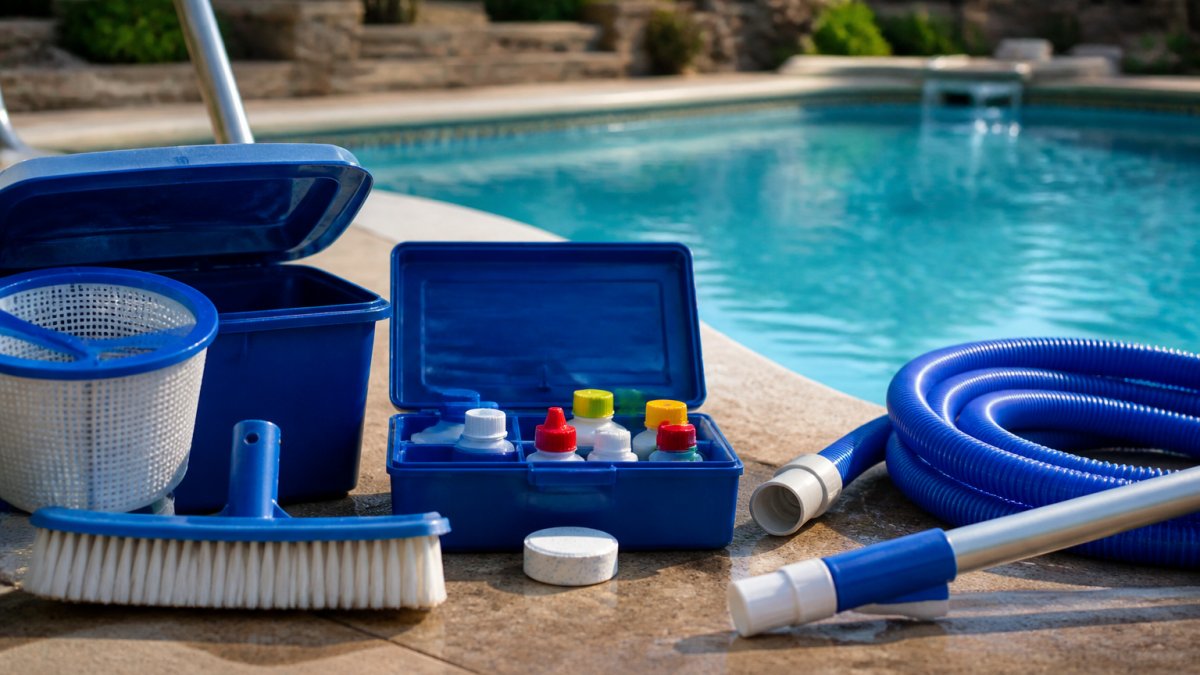
Every residential pool needs a working pump and filter, a test kit for chlorine and pH, a leaf skimmer, a brush, and a vacuum. A timer for the pump saves energy, and a solar cover reduces evaporation. In desert climates, an automatic filler helps maintain water level. These basics cover 90% of pool maintenance tasks and keep water safe and clear year-round.
What are the three C's of pool maintenance?
The three C's are circulation, cleaning, and chemistry. Circulation means running the pump long enough to turn over the water daily. Cleaning removes debris from the surface, walls, and floor. Chemistry involves testing and balancing pH, alkalinity, and sanitizer levels. Together, these three areas prevent algae, cloudy water, and equipment strain. Most pool problems trace back to neglecting one of the C's.
How often should I test pool water?
Test chlorine and pH daily or every other day during swim season. Test total alkalinity and calcium hardness weekly. In hot weather or after heavy use, test more often. Many homeowners bring a water sample to a pool store for a full analysis every two to four weeks. Consistent testing catches imbalances before they turn into green water or scale.
How often should I clean a pool filter?
Backwash sand and DE filters when the pressure gauge reads 8-10 psi above the clean starting pressure. Cartridge filters need rinsing every two to four weeks and a deep soak cleaning every three months. Replace cartridges every one to two years, sand every five years, and DE grids when damaged. A clean filter keeps circulation strong and reduces chemical demand.
How do I keep pool water clear and prevent algae?
Maintain free chlorine between 1 and 3 ppm, pH between 7.4 and 7.6, and total alkalinity between 80 and 120 ppm. Run the pump at least 8 hours daily, brush walls weekly, and shock the pool after heavy rain or high use. Keep phosphates below 100 ppb. These steps starve algae and keep water clear. If algae appears, act quickly with a double shock and brush.
When should I hire a professional pool maintenance service?
Hire a professional when your schedule leaves no time for weekly tasks, when water chemistry stays unbalanced despite your efforts, or when equipment problems like leaks or pump failures appear. A service handles testing, cleaning, and chemical adjustments on a reliable schedule. For homeowners in Buckeye and the West Valley, Task Genie offers full-service pool care backed by a 100% satisfaction guarantee.
Keeping up with a pool in the desert takes time most busy homeowners do not have. Task Genie handles it for you: locally owned and operated in Buckeye, we bring professional-grade equipment and premium products to every visit, with reliable scheduling and a 100% satisfaction guarantee. We serve residential and commercial clients across the West Valley, and we never cut corners. Get a free quote from Task Genie and keep your water swim-ready year-round.