 how-to
7 Steps to Remove Hard Water Stains From Windows
Last Updated: November 2, 2026
Quick Summary
Hard water stains are removed by spraying a vinegar solution on the spot, letting it sit for 5 to 10 minutes, then scrubbing gently with a non-scratch pad and rinsing. Start with one part vinegar to one part warm water for light spotting, and move to stronger dilutions only if needed. Test on a small area first.
- Let the vinegar solution dwell 5 to 10 minutes so the acid can break down the mineral crust.
- Use 1 part vinegar to 1 part warm water for light spotting or fresh film.
- Scrub in small circles with a non-scratch pad, using light pressure.
- Never scrub dry glass with steel wool or a coarse pad, as it leaves scratches.
- Test the solution on a small inconspicuous pane before treating the whole window.
Table of Contents
- What Hard Water Stains Are and How They Form
- How to Tell Mineral Deposits From Etched Glass
- Supplies You Need and Vinegar for Hard Water Stains on Windows
- How to Remove Water Spots From Glass, Step by Step
- Choosing the Best Hard Water Stain Remover for Glass
- Chemical Safety and Products to Avoid on Glass
- How to Prevent Hard Water Spots on Windows
- Booking a Professional Window Cleaning With Task Genie
- Frequently Asked Questions
What Hard Water Stains Are and How They Form
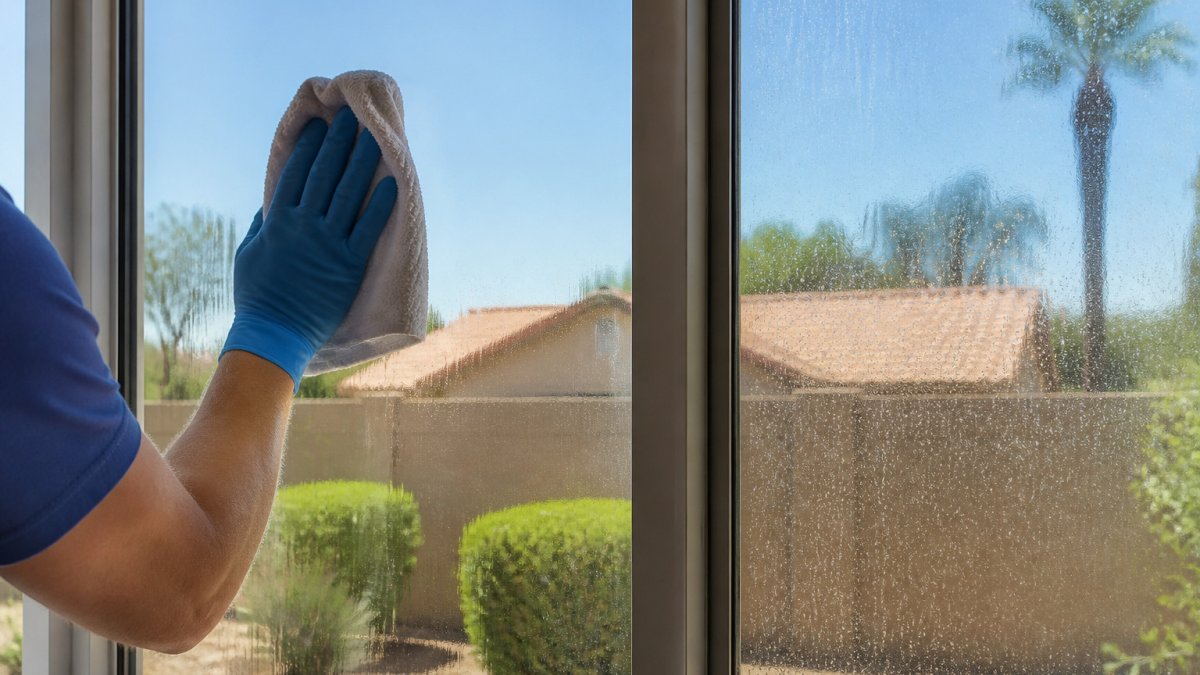
Hard water stains are white or cloudy marks left on glass when water containing dissolved minerals dries on the surface. Those minerals are mostly calcium and magnesium. As water evaporates, it leaves them behind as a crust that sticks to the glass.
Sprinklers are the most common cause on exterior windows. Water from irrigation splashes onto the glass, dries in the sun, and repeats the cycle day after day. Over months, the spots build up into a film that regular wiping cannot remove.
Mineral deposits are the source of the problem. The harder your local water, the faster they appear.
How to Tell Mineral Deposits From Etched Glass
Before you scrub, check what you are dealing with. Mineral deposits sit on top of the glass. Etching is damage to the glass itself, and no cleaner will fully remove it.
Try this simple test:
- Wipe the spot with a damp cloth and a little white vinegar.
- If the mark fades or disappears, it is a mineral deposit.
- If the mark stays put and feels smooth to the touch, the glass may be etched.
- If you can feel a slight dip when you run a fingernail across it, the damage is likely permanent.
Etched glass needs professional polishing or replacement. Trying harsh abrasives on it can make the surface look worse.
Supplies You Need and Vinegar for Hard Water Stains on Windows
Most of the work needs only basic household items, and the right supplies and dilution matter. Gather these before you start:
- White distilled vinegar (5% acidity is the standard grocery-store strength)
- Warm water
- A labeled spray bottle
- A non-scratch scrub pad (nylon or melamine-free)
- Two or three microfiber cloths
- A squeegee with a fresh rubber blade
- A bucket for clean rinse water
- Nitrile gloves and safety glasses
- A plastic scraper or old credit card for thick crust
Why vinegar works. White vinegar is roughly 5% acetic acid (Publication : USDA ARS). That acid converts the calcium and magnesium carbonate in hard water deposits into soluble salts that rinse away. It is slow but effective on light to moderate film.
Dilution by severity. A single ratio does not fit every window:
- Light spotting or fresh film: 1 part vinegar to 1 part warm water.
- Moderate buildup or visible white haze: 2 parts vinegar to 1 part water.
- Heavy crust or long-standing exterior film: undiluted vinegar, applied with a soaked cloth and covered to slow evaporation.
Mix only what you will use in a day, label the bottle, and never store a vinegar solution in an unmarked container.
Glass type and coating cautions. Not all glass behaves the same:
- Tempered glass is tougher against impact but no more scratch-resistant than annealed glass, keep grit off the pad.
- Tinted or filmed glass can be damaged by acidic cleaners at the film layer; check the manufacturer's guidance before using vinegar.
- Low-E and coated glass may have a thin metallic or polymer coating on one surface. Vinegar is generally tolerated, but prolonged dwell or undiluted acid can cloud some coatings.
- Frosted, etched, or textured glass traps deposits in its profile and is easy to scratch with abrasive pads.
Patch test first. Before treating a whole window, test the solution and pad on a small corner or an inconspicuous pane. Wait until it dries and inspect in raking light. If the glass looks hazy or the coating appears dull, stop and switch methods.
What not to buy. Skip steel wool, scouring powders, and pads labeled "heavy duty" for glass. They leave micro-scratches that trap minerals and make the next stain worse. Also avoid any cleaner that lists hydrofluoric acid or ammonium bifluoride, those are professional-only products and dangerous in inexperienced hands.
How to Remove Water Spots From Glass, Step by Step
Work on one window at a time, and avoid direct sun. A cool, shaded glass surface gives the solution more time to work.
Applying the Solution and Letting It Dwell
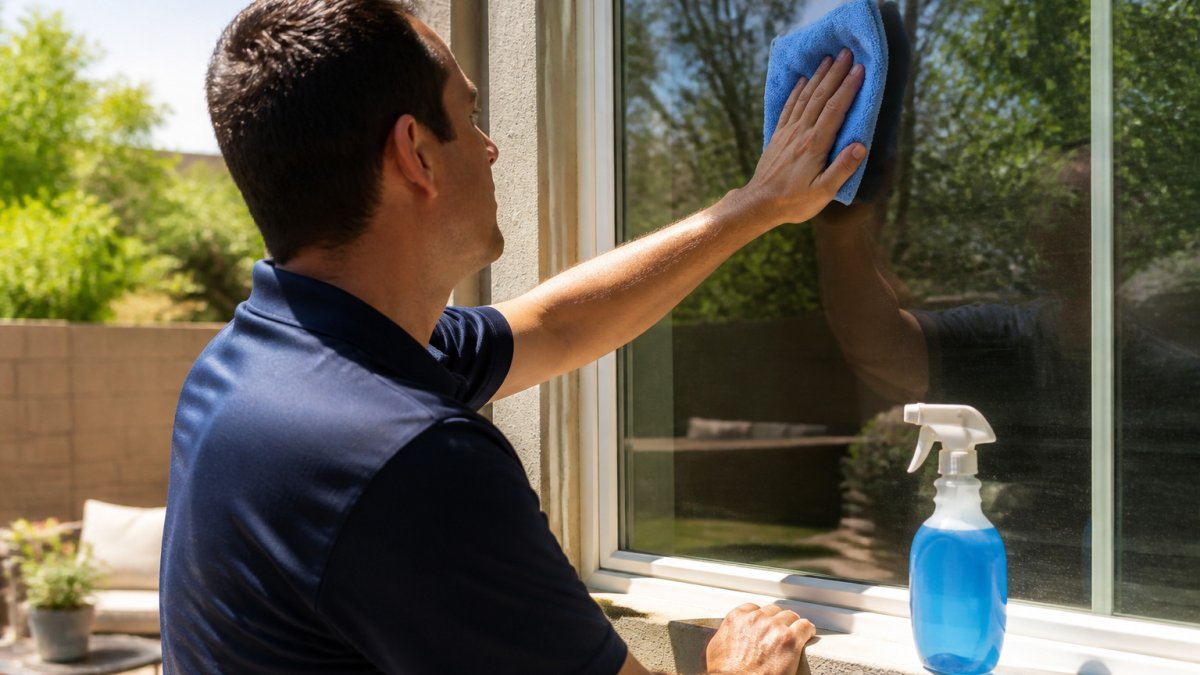
Spray the vinegar solution evenly across the stained area. Let it sit for 5 to 10 minutes so the acid can break down the mineral crust. For heavier buildup, you can soak a microfiber cloth in the solution and lay it over the spot.
Do not let the solution dry on the glass. If the surface starts to dry, spray it again.
Scrubbing, Rinsing and Drying Safely
Scrub in small circles with the non-scratch pad. Light pressure is usually enough. Stop if you feel grit under the pad, because that can mean dirt is scratching the glass.
Rinse the window with clean water, then dry it with a squeegee followed by a clean microfiber cloth. Wipe the edges to prevent drips.
Watch out: Never scrub dry glass with a coarse pad or steel wool. It can leave fine scratches that trap more dirt later.
Choosing the Best Hard Water Stain Remover for Glass
Vinegar works well for most light and moderate stains. Commercial mineral removers can help with heavier buildup, but they are stronger and require more care. To compare these DIY costs against hiring help, see the average cost of window cleaning. Read the directions before use.
Start with vinegar. Move to a specialty product only if vinegar does not work after two or three attempts.
Vinegar and commercial removers each suit different levels of buildup, so the article's guidance can be compared at a glance.
| Option | Best for | Key difference |
|---|---|---|
| White vinegar | Light to moderate film | Slow but effective; start here |
| Commercial mineral remover | Heavier buildup | Stronger; read directions first |
Chemical Safety and Products to Avoid on Glass
Most window-cleaning injuries come from mixing products or ignoring label directions, not from the cleaner itself. Treat every bottle, including vinegar, as a chemical with rules.
Ventilation and PPE. Work outdoors or with windows open. Wear nitrile gloves and safety glasses when using undiluted vinegar or any commercial mineral remover. If a product label calls for a respirator, use it, do not substitute a dust mask.
Never mix these.
- Vinegar and bleach release chlorine gas. Even residual bleach in a spray bottle can react.
- Vinegar and hydrogen peroxide form peracetic acid, which irritates lungs and eyes.
- Acid cleaners and ammonia-based glass cleaners can produce irritating fumes and reduce effectiveness.
- Commercial descalers and bleach, many descalers are acidic and will off-gas when combined with bleach.
Rinse and dry spray bottles and tools between products. Do not pour leftover solutions into the same container.
Read the label before you spray. Commercial mineral removers vary widely: some are acid-based, some are chelated, and some contain hydrofluoric acid or ammonium bifluoride. The last two are professional-only and require specialized PPE, do not buy them for home use. Follow dwell times exactly; longer is not better and can etch coatings or frames.
Protect surrounding surfaces. Acidic cleaners can dull painted trim, stone sills, aluminum frames, and concrete. Tape off or pre-wet adjacent surfaces, and rinse plants with clean water after any overspray.
Disposal and storage. Never pour leftover acid solutions down a drain with bleach residue. Store cleaners in original labeled containers, out of reach of children and pets, and away from heat. Check local household hazardous waste rules for disposal of commercial descalers.
When to stop and call a pro. If a stain does not respond after two or three attempts with vinegar, or if you suspect the glass is etched, coated, or filmed, stop. Repeated acid exposure and scrubbing cause more damage than the original stain. A professional can assess whether polishing, restoration, or replacement is the right path.
How to Prevent Hard Water Spots on Windows
Prevention saves far more effort than removal. Start by keeping sprinklers from hitting the glass. Adjust the heads so water lands on the lawn or planting beds, not the windows.
Other helpful habits include:
- Rinse exterior windows with clean water after sprinklers run.
- Wipe the glass every few weeks, especially in the hottest months.
- Use a squeegee after each rinse so water does not dry on the surface.
If you want a deeper walkthrough for routine upkeep, read How to Clean Exterior Windows: A Step-by-Step Guide.
Booking a Professional Window Cleaning With Task Genie
Some stains are too heavy or too widespread for a weekend project. At Task Genie, we are a locally owned property care company serving Buckeye and surrounding areas. We handle residential and commercial window cleaning.
If you want to know whether hiring a pro makes sense for your home, Is Professional Window Cleaning Worth It? explains how to weigh the options against your time. When you are ready, request a free quote from Task Genie or see the window cleaning services we offer.
Frequently Asked Questions
How can I remove stubborn water spots from glass?
Start with undiluted white vinegar or a mix of equal parts white vinegar and warm water. Spray it on the spots, let it dwell for 5 to 10 minutes so the minerals soften, then scrub gently with a non-scratch pad and rinse. For heavy, crusted deposits, repeat the process or move to a commercial mineral remover made for glass. Avoid abrasive powders, which can scratch the surface and leave permanent marks.
Should I let vinegar sit on windows before wiping it off?
Yes, but only briefly. Letting a vinegar solution dwell for about 5 to 10 minutes gives it time to dissolve calcium and lime deposits. Do not let it dry on the glass, because drying can leave new residue. Keep the window shaded and cool while you work, and rinse thoroughly so no acid film remains on the frame or sealant.
Can hard water stains permanently damage windows?
Mineral deposits sitting on glass for a long time can sometimes etch the surface, especially on coated or low-emissivity glass. Etching usually feels smooth to the touch and does not wipe off, while deposits feel rough or chalky and do come off with cleaning. If the surface still looks cloudy after proper cleaning, the glass may be etched and may need professional glass repair or replacement.
Hard water stains are frustrating, but they are manageable with the right approach. Start with vinegar, keep sprinklers off the glass, and call a professional when the damage goes beyond a simple clean. Task Genie is ready to help you keep your windows clear year-round.