 how-to
How to Prevent Weed Growth in Pavers for Good
Last Updated: November 5, 2026
Quick Summary
Preventing weed growth in pavers means blocking the four entry points where seeds land: joint gaps, edges, cracks, and soil below. Remove existing weeds root and all, refill joints with polymeric or stabilizing sand, then apply a paver sealant to lock the surface and slow seed settlement.
- Seeds arrive by wind, rain, birds, and foot traffic, then germinate once moisture reaches them.
- Pull weeds by hand after rain, when soil is soft and roots release cleanly.
- Polymeric sand hardens after wetting and blocks seeds when installed correctly.
- Skip the removal step and you are sealing weeds in place.
- Plastic sheeting traps water and blocks drainage, so landscape fabric is the better barrier choice.
Table of Contents
- Where Weeds Between Pavers Actually Come From
- How to Get Rid of Weeds Between Pavers Naturally
- Best Paver Weed Removal Tool for Joints and Edges
- Using Polymeric Sand Between Pavers to Block New Growth
- How to Get Rid of Weeds Between Pavers Permanently
- Installation Mistakes That Let Weeds Back In
- Desert-Climate Maintenance: What Buckeye-Area Homeowners Should Expect
- Book a Paver Sealing Assessment Before Next Monsoon Season
- Frequently Asked Questions
Where Weeds Between Pavers Actually Come From
Weeds in pavers don't appear out of nowhere.
This guide from Task Genie covers the full picture: where weeds start, how to remove them safely, and how to keep them from coming back.
Weed growth in pavers is the sprouting of seeds in the sand-filled gaps, edges, and cracks of a paved surface. Seeds arrive by wind, rain, birds, and foot traffic.
The Four Entry Points: Joints, Edges, Cracks, and Soil Below
- Joint gaps: The sand-filled spaces between paving stones. Seeds land here constantly.
- Edges: The border where pavers meet soil, grass, or gravel. Weeds creep in from the side.
- Cracks: Hairline fractures in individual pavers or the base beneath them.
Most homeowners blame the pavers. The real culprit is usually what's sitting between them.
How to Get Rid of Weeds Between Pavers Naturally
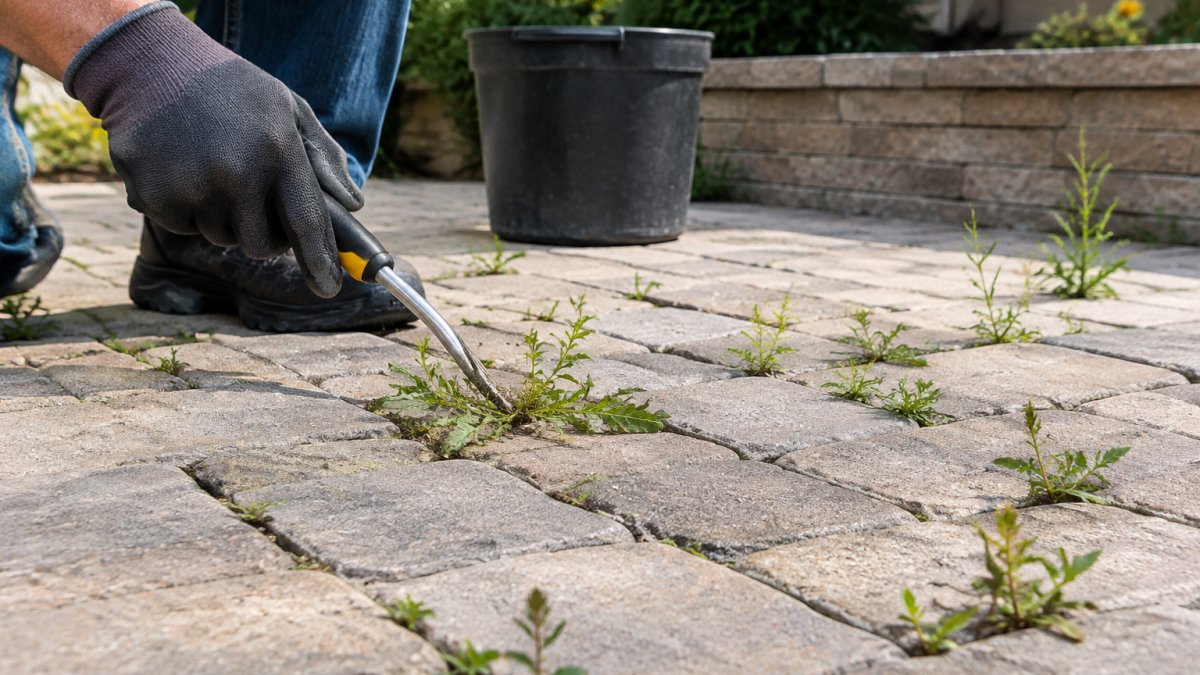
Start with the simplest method that works: pull by hand after rain, when the soil is soft and roots release cleanly.
For tougher weeds, try these in order:
- Vinegar spray: Household white vinegar on a sunny day. Repeat every few days.
- Flame weeder: A propane torch passed quickly over joints. Keep a hose nearby.
- Salt: Use sparingly and only where nothing else grows. Salt stays in soil.
Watch out: vinegar and salt can stain or etch some pavers and harm nearby plants. Test a small spot first.
University extension guidance on non-chemical weed control
Once the joints are clear, a proper cleaning pass removes the dirt and debris that seeds need. Our guide to removing paver stains covers the methods that work without damaging the surface.
Best Paver Weed Removal Tool for Joints and Edges
The right paver weed removal tool depends on where the weed is growing. A stiff wire brush handles surface seedlings in wide joints. A joint knife or crack weeder gets into narrow gaps. For edges, a half-moon edger cuts clean lines and lifts roots.
Here's what we reach for, and when:
| Tool | Best For | Watch Out For |
|---|---|---|
| Wire brush | Surface seedlings, wide gaps | Can scratch soft pavers |
| Joint knife | Narrow joint gaps | Slow on large areas |
| Half-moon edger | Edges and borders | Needs sharp blade |
| Flame weeder | Large patios, dry weather | Fire risk near mulch |
| Pressure washer | Deep dirt buildup | Blasts out joint sand |
A pressure washer is the fastest way to clear joints, but it also strips the sand that holds them tight.
Using Polymeric Sand Between Pavers to Block New Growth
Polymeric sand between pavers is a common joint filler for blocking weeds, when it is installed correctly. It hardens after wetting, locking joints tight and closing the gaps where seeds land.
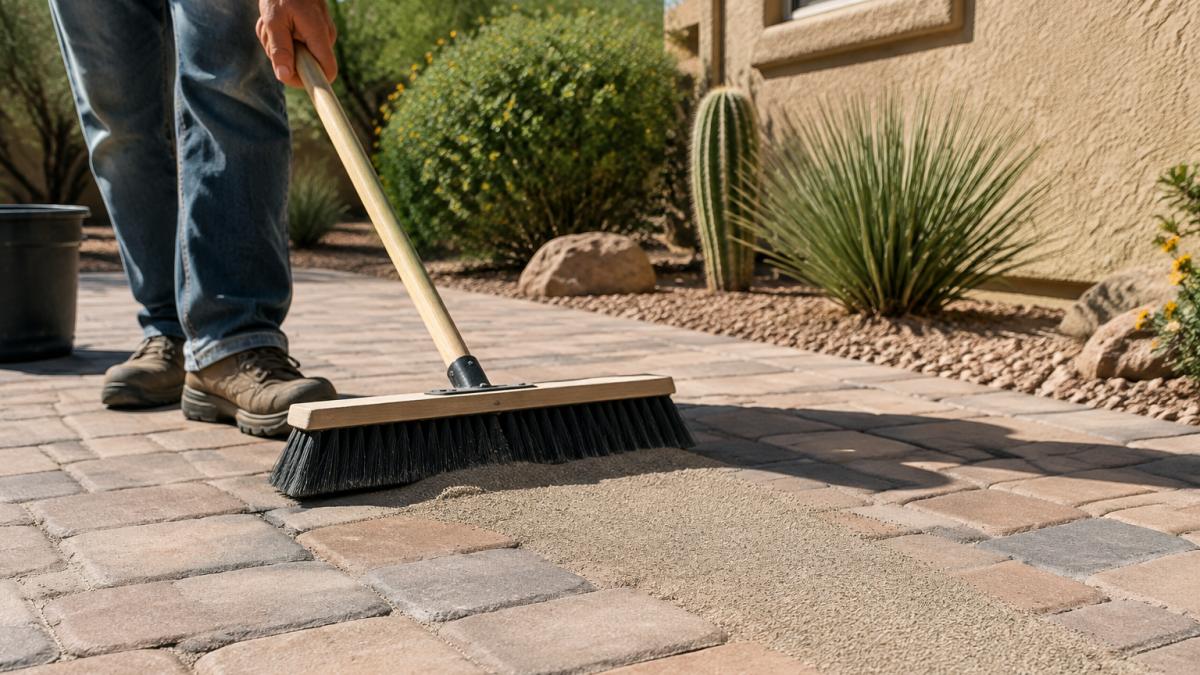
The process matters as much as the product:
- Clean joints out completely, removing old sand and dirt to a consistent depth, most manufacturers specify about 1 inch below the paver surface, but check the bag because requirements vary.
- Let the surface dry fully. Polymeric sand will not bind to wet pavers or damp joints.
- Sweep polymeric sand into the joints, working in small sections so it does not set before you finish.
- Tamp it down and top off low spots. Compaction is what drives the binder into the joint.
- Mist with water to activate the binder, a light, even mist, not a soaking flood.
- Stay off the surface for the recommended cure time, typically 24 hours, and keep sprinklers off it.
Polymeric vs. Regular vs. Stabilizing Sand: What Actually Works
The three joint fillers behave very differently, and the right choice depends on joint width, climate, and how much maintenance you will actually do.
- Regular sand: Cheapest, but washes out and invites weeds back fast. Best only as a temporary fill or on joints under about 1/8 inch where polymeric sand cannot penetrate.
- Stabilizing sand: Holds up better than regular sand and still allows some movement. It is a good middle ground for freeze-thaw climates because it flexes with the pavers instead of cracking.
- Polymeric sand: Hardens after wetting and blocks seeds when installed correctly, provided the joint is wide enough to accept it. Wider joints need a different approach, such as a larger aggregate base or a two-part polymeric product.
A common pattern is that homeowners buy polymeric sand, skip the compaction step, and then blame the product when it washes out after the first heavy rain. The failure is almost always installation, not formulation.
Why Polymeric Sand Fails, and How to Fix It
- Hazy residue on the pavers: Usually caused by over-wetting or sweeping too much sand across the surface before misting. Fix by re-wetting lightly and scrubbing with a soft brush after cure, or use a manufacturer-approved residue remover.
- Sand washing out of joints: Often a sign of under-compaction or joints that are too shallow. Re-clean, re-fill, and tamp more thoroughly.
- Crumbling or powdery joints: Can indicate the sand was activated while the pavers were damp or that too much water was applied at once. Remove the failed sand and reinstall.
If weeds keep winning, the joints may be due for re-sanding. Our guide on how often to seal outdoor pavers explains the maintenance rhythm that keeps joints and sealant working together.
Manufacturer installation guidance for polymeric sand joint depth and cure times
How to Get Rid of Weeds Between Pavers Permanently
Permanent weed prevention in pavers is a system, not a single product. No method erases every seed forever, but the right combination keeps regrowth to a minimum.
Build the system in this order:
- Remove every weed, root included, before blocking anything.
- Re-sand joints with polymeric or stabilizing sand.
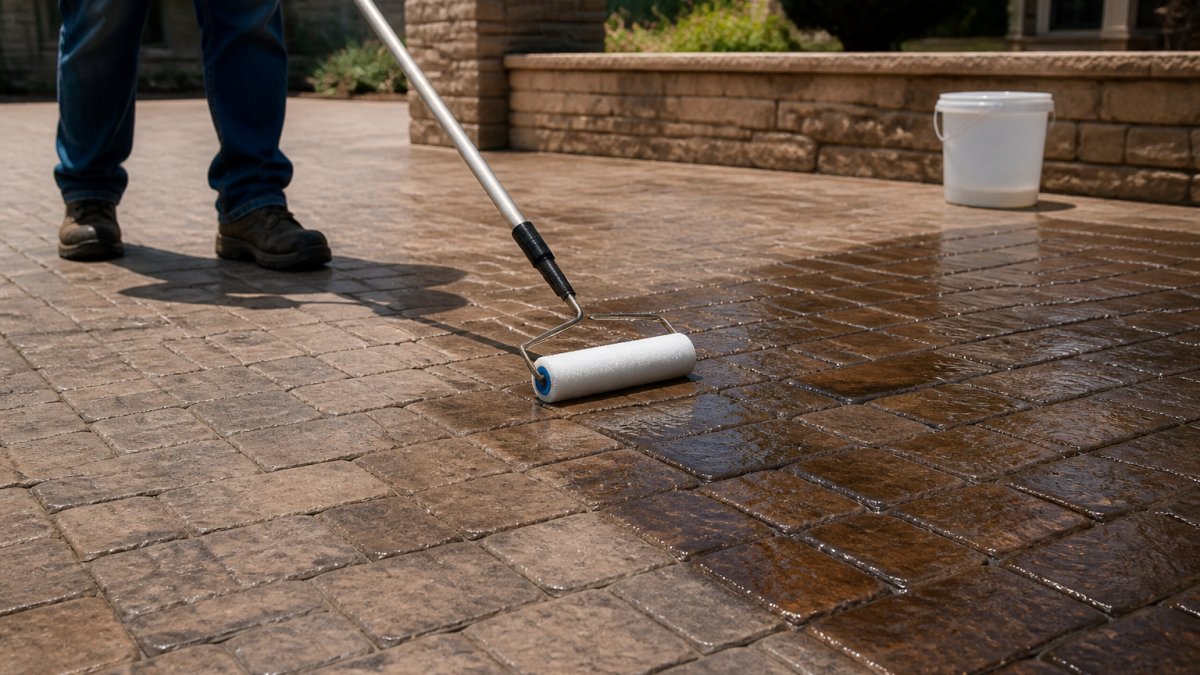
- Apply a paver sealant to lock the surface and slow seed settlement.
Skip the removal step and you're sealing weeds in place. Skip the sealing step and you're re-sanding every season.
Sealing protects against stains, which is why Task Genie offers expert paver sealing as part of long-term paver care.
Installation Mistakes That Let Weeds Back In
Bad installation is the number one reason weeds return. Even the best joint sand fails when the base underneath is wrong. But most guides stop at listing the mistakes. The more useful approach is to read the symptom on your patio and trace it back to the installation error that caused it.
Symptom-to-Cause Troubleshooting
- Symptom: Joints widen and sand disappears after rain. Likely cause: too little base material or no compaction. A thin or loose base lets pavers settle unevenly, opening joints that then collect seed-bearing dirt. Fix: lift the affected pavers, add and compact base material in lifts of about 2 inches, and re-set.
- Symptom: Water pools in joints or along the edge. Likely cause: wrong slope or inadequate drainage. Standing water feeds seeds and softens the base. Fix: correct the slope so water runs off the surface, most practitioners aim for about a 1 to 2 percent slope away from structures, and clear any clogged drainage paths.
- Symptom: Weeds sprout in a straight line along the border. Likely cause: missing or failed edge restraint. Without a solid edge, pavers creep outward, joints open, and soil migrates in. Fix: install or repair edge restraint and re-sand the perimeter joints.
The Installation Checklist That Prevents Most Weed Problems
Proper installation includes a compacted base, correct slope for water runoff, and consistent joint width. Fix the base and the joints behave.
- Base depth and compaction: Compact in lifts rather than all at once; a single thick lift will not reach proper density.
- Joint width consistency: Use paver spacers during installation so gaps stay uniform and sand has a consistent channel to lock into.
- Edge restraint: A rigid edge holds the field tight and keeps soil from creeping in at the borders.
- Drainage path: Confirm water has somewhere to go before you re-sand, or the new sand will wash out on the first storm.
Why Plastic Sheeting Under Pavers Backfires
Plastic sheeting traps water and blocks drainage. Water pools, the base softens, and joints shift. Weeds find the new gaps anyway, and now you have a drainage problem too. Landscape fabric is the better choice when a barrier is needed, because it lets water pass through while still blocking soil migration from below.
Desert-Climate Maintenance: What Buckeye-Area Homeowners Should Expect
Desert heat changes the maintenance calendar. In our area, intense sun breaks down sealant faster, monsoon rain drives seeds into joints, and irrigation keeps soil moist enough for constant germination.
That means:
- Re-sand joints when sand drops below the paver surface.
- Reseal based on wear, not a fixed date.
- Check edges and borders after every monsoon.
- Watch for ant activity, since ant sand displaces joint sand.
We handle paver sealing for homes and businesses across the area. You can see the full range of our services for local properties.
Book a Paver Sealing Assessment Before Next Monsoon Season
Preventing weed growth in pavers gets much easier when the surface is sealed and the joints are sound. Task Genie can assess your patio and provide paver sealing services. Pricing depends on the project, so request a quote for current rates.
Want to understand what sealing protects against first? Read the benefits of paver sealing for homeowners, then get a free quote.
Frequently Asked Questions
How do you prevent weeds from growing between pavers?
Prevention starts with the joints. Fill them completely with polymeric or stabilizing sand so there is no loose soil for seeds to land in, then keep the surface swept and free of dirt buildup. Check the edges where pavers meet soil or gravel, since that is the most common entry point. Re-sand thin or washed-out joints after heavy rain, and treat any new seedlings within a week before roots establish. A sealed, fully filled joint system is the single biggest factor in stopping weed growth in pavers.
What is the downside to polymeric sand?
Polymeric sand can fail if it is applied to a wet surface or if the pavers are not fully dry, leaving a haze on the surface that is hard to remove. It also needs reapplication every few years, particularly in desert climates with intense sun and monsoon runoff. Joint washout on steep slopes is another issue. When installed correctly and topped off as needed, it remains the most reliable joint filler for blocking seeds and weed seedlings.
What kills weeds permanently between pavers?
No single product kills weeds permanently, because new seeds blow in with wind and rain. The permanent fix is structural: pull existing weeds roots and all, refill joints with polymeric sand, correct drainage and slope so water runs off instead of pooling, and maintain the joint layer each season. Herbicides only address what is already growing. A paver weed removal tool plus a proper re-sanding routine removes the conditions weeds need, which is what actually keeps them from returning.
What can you put between pavers to stop weeds?
Polymeric sand and stabilizing sand are the two best options for paver joints, since both harden and resist washout. Regular joint sand works short-term but erodes faster and leaves gaps. Landscape fabric can be used under the bedding layer during installation, but plastic sheeting is not recommended because it traps water and causes settling. Avoid filling joints with soil or gravel, which gives seeds a place to germinate.
Weeds are stubborn, but a sealed, properly sanded patio gives them nowhere to root. Task Genie is locally owned and operated in Buckeye, and we back every job with a 100% satisfaction guarantee, professional-grade equipment, and reliable scheduling. Get started with Task Genie and keep your pavers clean, protected, and weed-free season after season.