 ultimate-guide
How Do You Keep Curb Appeal Year-Round?
Last Updated: November 1, 2026
Quick Summary
You keep curb appeal year-round by following a season-by-season maintenance calendar rather than relying on one big spring cleanup. Spring covers beds, mulch and irrigation audits, summer focuses on water and weeds, fall handles pruning and sealing, and winter protects hardscapes and plans ahead.
- Adjust your maintenance calendar by roughly two to four weeks per USDA hardiness zone boundary.
- Water deeply and infrequently, typically 1 inch per week including rainfall.
- Overseeding cool-season turf in September is the highest-return lawn task in cold zones.
- Refresh mulch to a consistent 2-3 inch depth to suppress weeds and hold moisture.
- Clean and seal pavers in fall before winter moisture and freeze-thaw cycles begin.
Table of Contents
- Why Year-Round Curb Appeal Takes a Calendar, Not a Weekend
- Your Curb Appeal Maintenance Checklist by Season
- Seasonal Landscaping Tips That Keep Color Coming Back
- Low-Maintenance Landscaping for Curb Appeal That Holds Up
- Your Exterior Home Maintenance Checklist for Windows, Pavers, and Paint
- The High-Impact Jobs Worth Outsourcing
- Get a Free Quote and Put Your Property on a Maintenance Schedule
- Frequently Asked Questions
Why Year-Round Curb Appeal Takes a Calendar, Not a Weekend
Curb appeal is the visual impression a property makes from the street, and it fades faster than most homeowners expect because it depends on maintenance cycles rather than one big push.
A single weekend cannot hold up against a full year of sun, dust, monsoon runoff, and seasonal growth. What works is a calendar. Below, we break down how to maintain curb appeal year round with a season-by-season schedule you can follow, delegate, or hand off entirely.
Your Curb Appeal Maintenance Checklist by Season
Here is the full curb appeal maintenance checklist at a glance. Each season has a distinct job, and skipping one creates work in the next. The month-by-month detail that follows is what separates a property that holds its look from one that peaks in May and fades by August.
| Season | Core Tasks | Frequency |
|---|---|---|
| Spring | Refresh beds, add mulch, edge borders, first mow, irrigation audit | Once, plus weekly mowing |
| Summer | Irrigation checks, weed control, pool readiness, deadheading | Weekly |
| Fall | Prune, clear debris, clean and seal hardscape, overseed cool-season turf | Once, plus monthly checks |
| Winter | Protect pavers, plan plantings, clean windows, service equipment | Monthly |
A Month-by-Month Calendar by USDA Hardiness Zone
Most guides give you four seasons and stop. That is not enough, because the same task lands in different months depending on where you live. The USDA Plant Hardiness Zone Map is the standard reference for minimum winter temperatures and the backbone of any maintenance calendar that works. The pattern below covers Zone 5 (cold winters, short growing season) through Zone 9 (mild winters, long heat). Adjust by roughly two to four weeks per zone boundary.
Zone 5-6 (cold winters)
- March: Cut back ornamental grasses and perennials left standing for winter interest. Rake beds, remove winter debris, and apply the first round of mulch once soil thaws. Service the mower and sharpen the blade before the first cut.
- April: First mow at a lower height to remove dead tips, then raise the deck. Edge beds with a spade cut. Audit irrigation heads and replace any cracked risers from freeze damage.
- May: Plant annuals after the last frost date for your zone. Refresh mulch to a consistent 2-3 inch depth. Begin weekly mowing.
Zone 7-8 (transition zone)
- February-March: Rake beds, cut back perennials, apply mulch. First mow when turf begins active growth.
- April: Plant annuals; audit irrigation before heat arrives. Edge beds.
- May-September: Weekly mowing, deep watering, weed control. Deadhead perennials. Watch for heat stress on newly planted shrubs.
Zone 9 (mild winters, long heat)
- January-February: Prune dormant shrubs and trees. Refresh mulch. Plant cool-season annuals.
- March: First mow; audit irrigation before the heat ramp. Edge beds.
- April-October: Weekly mowing, deep watering (often 1-1.5 inches per week in peak heat), weed control. Watch irrigation timers as temperatures climb; adjust monthly rather than seasonally.
Spring: Beds, Mulch, and First Impressions
Spring sets the property's baseline for the year. Clear winter debris from beds, then refresh mulch to a consistent depth so beds read as intentional rather than patchy.
Mow low on the first pass to remove dead growth, then raise the deck for the season. Check irrigation heads for clogs and misdirection before the heat arrives; skipping the spring audit means chasing dry spots all summer.
Summer: Water, Weeds, and Pool Readiness
Heat is the test. Irrigation runs longer and more often, weeds move fast into any bare spot, and pool water needs consistent attention.
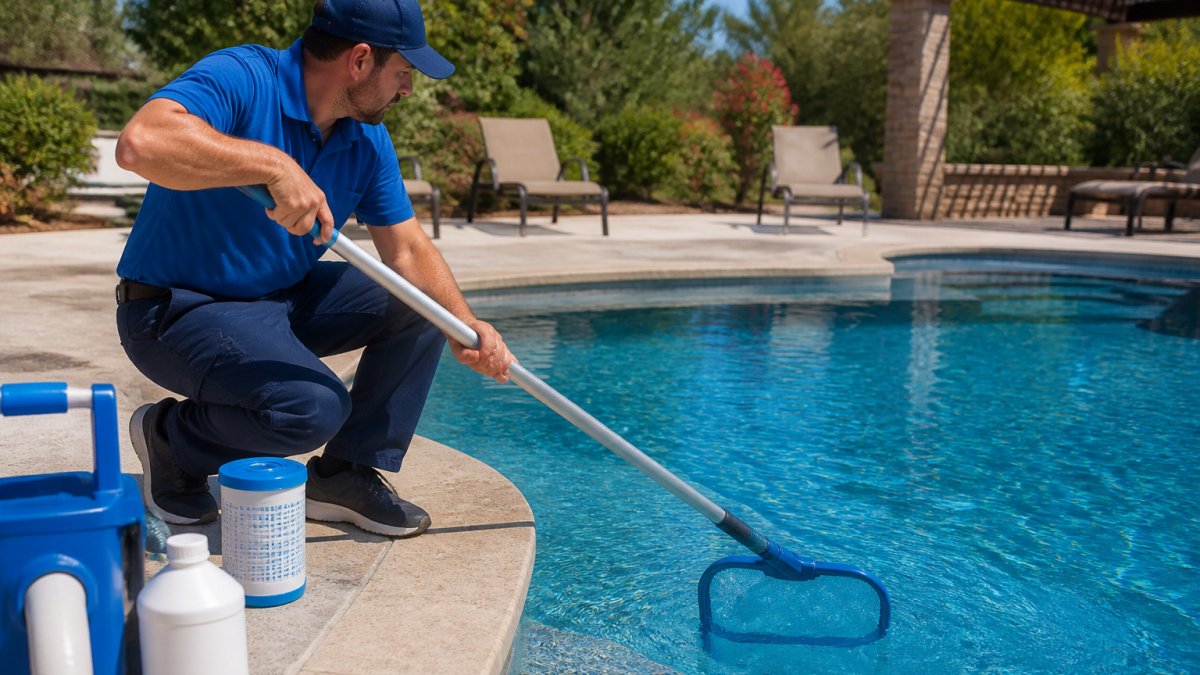
For a practical weekly routine, our residential pool maintenance checklist covers the tasks that keep water clear through the hottest months. Letting pool chemistry drift for two or three weeks in summer usually means a much bigger correction later.
Fall: Trim Back, Clean Up, and Prep Surfaces
Fall is prep season. Prune shrubbery back into shape, cut perennials that have finished, and clear leaves before they stain hardscape. This is also the right window to clean pavers and evaluate sealing before winter moisture settles in.
If you are unsure whether your hardscape is due, our guide on how often to seal outdoor pavers explains the timing signals.
Winter: Protect Hardscapes and Plan Ahead
Winter is quieter but not idle. Freeze-thaw cycles and moisture are hard on pavers and exterior surfaces, so inspect for cracks, shifting, and drainage problems. Keep gutters clear and check that water sheds away from the foundation.
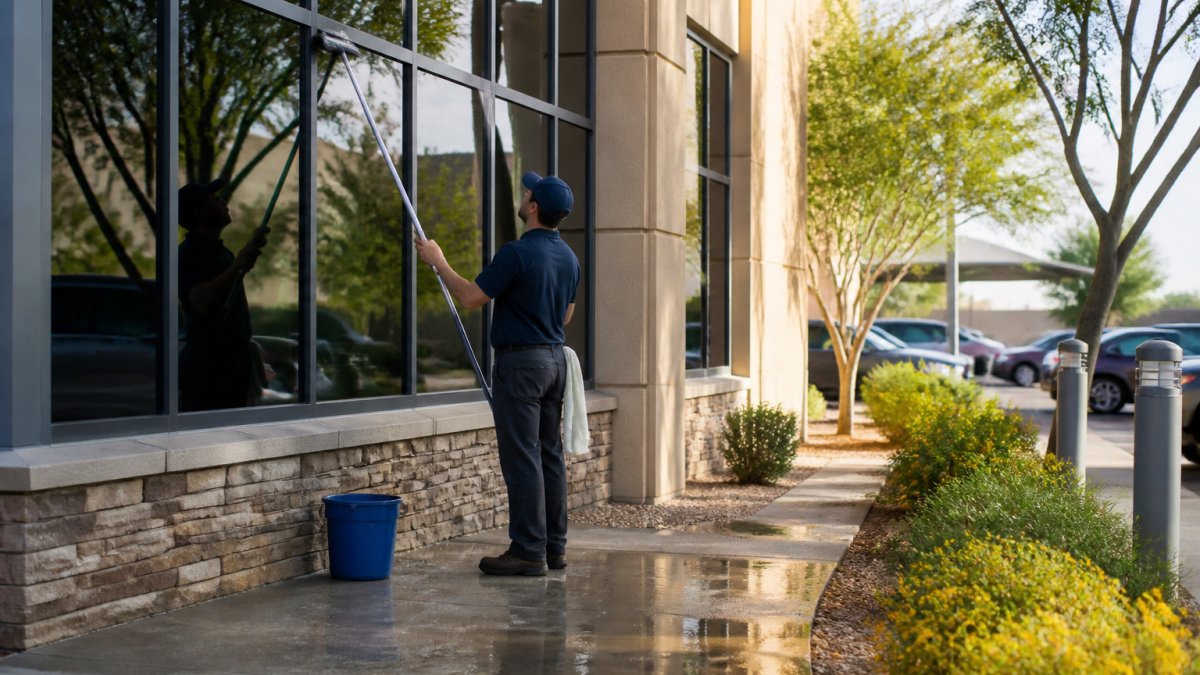
Use the downtime to plan spring plantings and budget for bigger projects. It is also a good month for window cleaning, since clear glass shows off interior lighting and makes the facade look maintained even when the garden is dormant.
Seasonal Landscaping Tips That Keep Color Coming Back
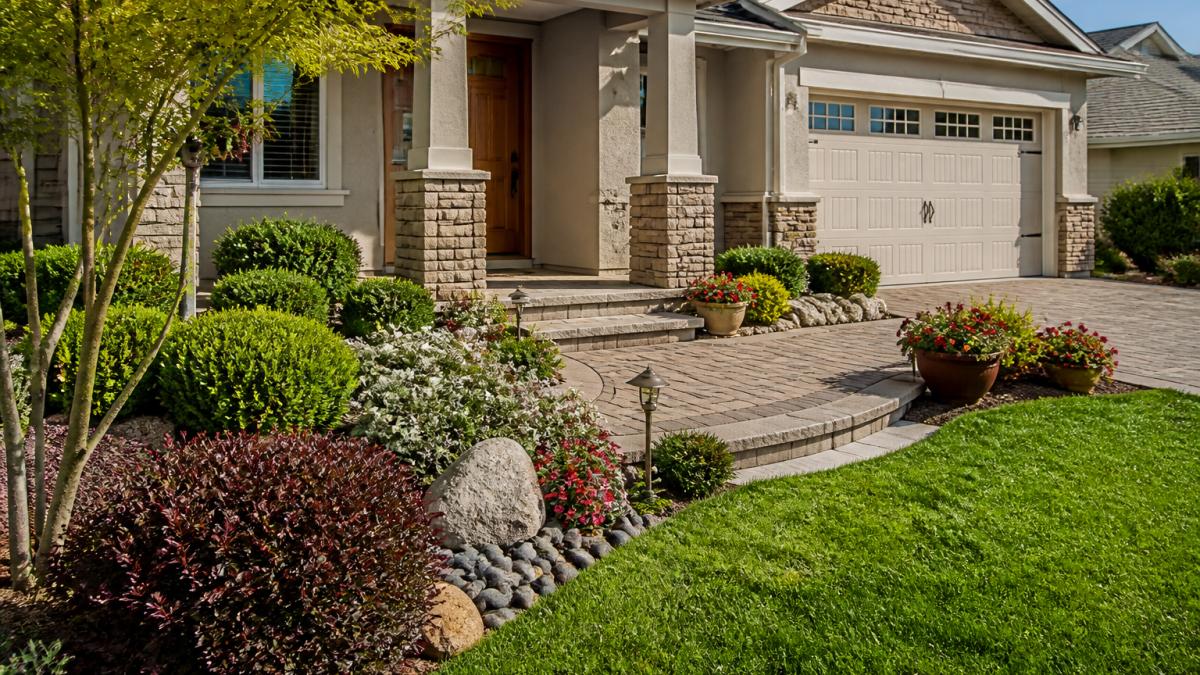
Reliable color comes from planning, not luck. The most dependable strategy is layering evergreens for structure with perennials for repeat bloom and annuals for instant seasonal color. Martha Stewart's guidance on evergreen shrubs recommends evergreens specifically because their foliage stays attractive all year, which means the property never looks bare between bloom cycles.
A simple rotation:
- Evergreen shrubbery as the backbone of foundation plantings
- Perennials for spring and summer color that returns on its own
- Annuals swapped in for high-impact seasonal color at entries and beds
CrossCountry Mortgage's low-maintenance landscaping advice makes the same point: season-long blooms plus hardscaping sustain interest with less ongoing effort. Rotate annuals twice a year and the beds never look stale.
Low-Maintenance Landscaping for Curb Appeal That Holds Up
The best low-maintenance landscaping for curb appeal starts with plant selection, not shortcuts. Native and drought-tolerant plants adapted to local heat and soil need less water and fewer replacements, and shade-tolerant varieties fill spots where full-sun plants struggle.
What most guides miss is that maintenance burden comes from layout as much as from plants. Group plants by water need so irrigation zones match, keep beds wide enough to mow around cleanly, and use mulch to suppress weeds rather than constant pulling.
Sustainable Curb Appeal: Xeriscaping, Pollinators, and Chemical-Free Care
The angle most year-round curb appeal guides skip is sustainability. A landscape that looks good in every season and costs less to maintain usually works with the local climate rather than against it. Three practices carry most of the weight.
Xeriscaping. Xeriscaping is not zero landscaping or a yard of gravel. It is a design approach that groups plants by water need and uses drought-tolerant species, efficient irrigation, and mulch to cut water use without sacrificing color. For curb appeal, the practical moves are:
- Replace turf in narrow strips and hard-to-water corners with drought-tolerant perennials or ornamental grasses.
- Use drip irrigation on beds and a smart controller that adjusts to weather rather than a fixed timer.
- Apply 2-3 inches of mulch to reduce evaporation and suppress weeds.
Pollinator-friendly plantings. A bed of native perennials that supports bees and butterflies is both lower-maintenance and more visually interesting than a monoculture of annuals.
Layout Decisions That Cut Maintenance
Plant selection gets the attention, but layout drives the ongoing workload. A few decisions pay off every week:
- Match irrigation zones to plant water needs. Group thirsty plants together and drought-tolerant plants together so one zone does not overwater half the bed.
- Keep bed edges wide enough to mow around cleanly. A bed that requires string-trimming every week is a maintenance trap.
- Use mulch as a weed barrier, not a decoration. A consistent 2-3 inch layer suppresses weeds and holds moisture; a thin, patchy layer does neither.
A property designed this way holds its look with weekly yard maintenance instead of weekend-long overhauls.
Your Exterior Home Maintenance Checklist for Windows, Pavers, and Paint
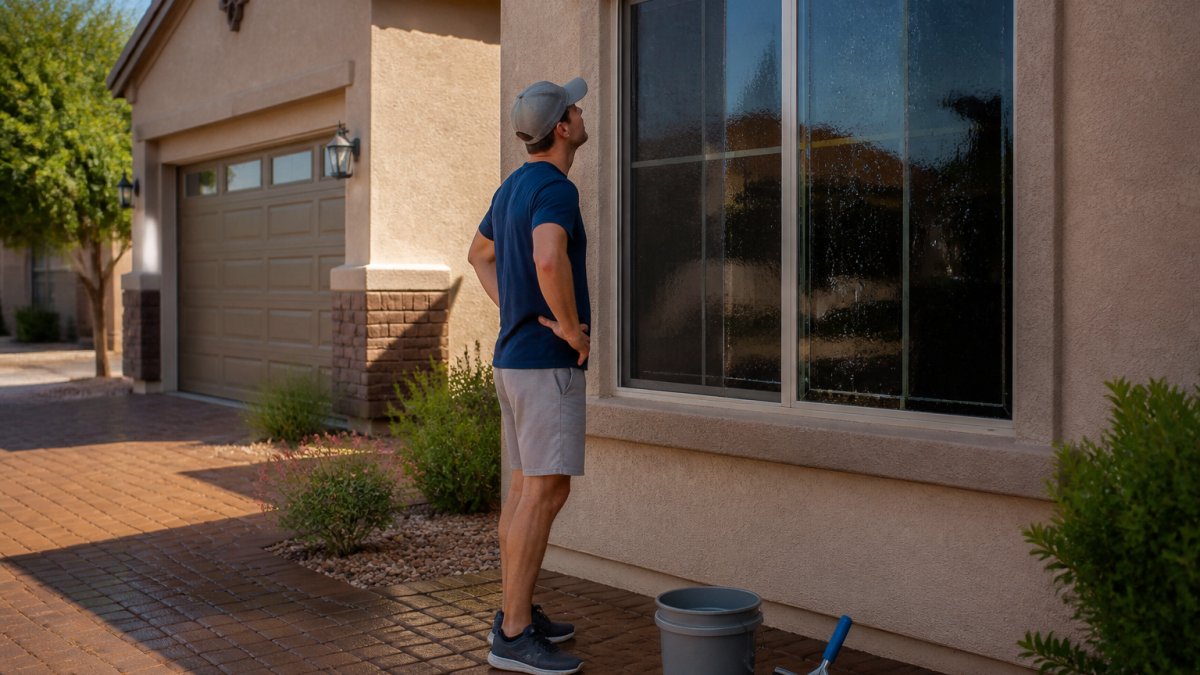
Exterior home maintenance checklist items carry the most visible weight, because glass, hardscape, and paint are what people actually see from the street. Work through these in order:
- Clean exterior windows inside and out; streaks and dust read as neglect from the curb.
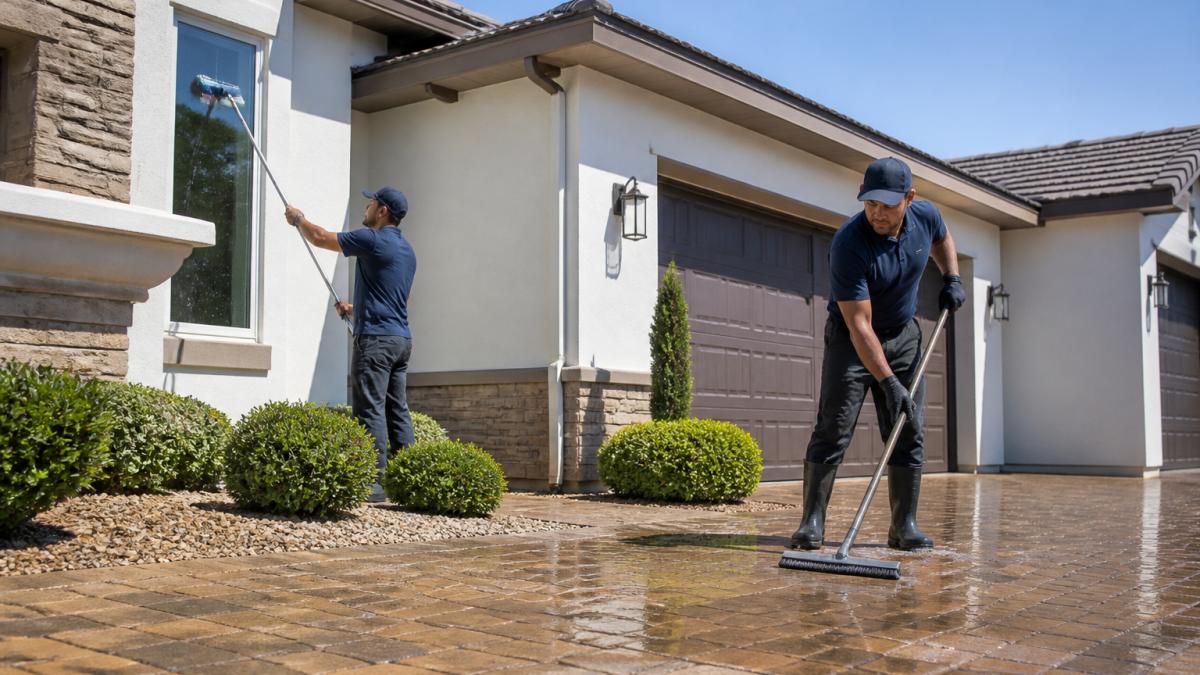
- Inspect paver joints for weeds, shifting, and stains, then clean before any sealing.
- Touch up exterior paint on trim, doors, and shutters where sun has faded or chipped it.
- Wash light fixtures and check bulbs so landscape lighting works when it matters.
- Clear gutters and downspouts so water moves away from hardscape and foundation.
For the window step, our step-by-step exterior window cleaning guide covers the technique that avoids streaks. Windows are the highest-impact, lowest-effort item on this list.
The High-Impact Jobs Worth Outsourcing
Some jobs return more visible value per hour than others, and those are the ones to hand off. Window cleaning, paver sealing, and pool maintenance all require equipment, consistency, and a schedule most homeowners cannot sustain alongside work and family.
Paver sealing is a clear example. If you are weighing what to keep in-house, our guide to professional exterior property maintenance services explains what each service covers and when it pays to delegate.
Get a Free Quote and Put Your Property on a Maintenance Schedule
The hardest part of year-round curb appeal is not knowing what to do. It is doing it every season without fail. That is the gap Task Genie was built to close.
Get started with Task Genie and put your property on a maintenance schedule that keeps it looking its best in every season. Request a free quote to get current pricing.
Frequently Asked Questions
How do you maintain curb appeal throughout the year?
Break the work into a repeating four-season cycle instead of one big push. Spring covers fresh mulch, bed edging, and annuals. Summer focuses on irrigation, weed control, and pool balance. Fall means trimming, pruning, and clearing gutters and hardscape. Winter is for protecting pavers, checking exterior lighting, and planning next year's plantings. A written curb appeal maintenance checklist with dates attached keeps each task from slipping, and scheduling recurring professional visits for windows, pavers, and pool care removes the tasks most homeowners skip.
What should homeowners do each season to improve curb appeal?
Each season has a short list of high-return tasks. Spring: refresh mulch, edge garden beds, and add seasonal color. Summer: stay on top of weed control, mow and trim the lawn, and keep irrigation running evenly. Fall: prune shrubbery, clean windows before holiday guests arrive, and seal pavers before winter moisture sets in. Winter: touch up exterior paint and shutters, check landscape lighting, and clear debris from walkways. Small, consistent updates beat one large project because visual interest depends on maintenance, not a single install.
How can I improve curb appeal without spending a lot?
Start with cleaning and edging, which cost little and change the most. Wash windows inside and out, pressure-clean walkways, and cut a crisp line along garden beds. Add fresh mulch, which instantly gives beds a uniform look. Move one or two evergreen shrubs or foundation plantings to balance the front elevation. Replace dated exterior light fixtures and house numbers. These tasks raise outdoor aesthetics faster than a full landscape redesign, and most can be handled by a property care team on a scheduled visit.
What landscaping looks good year-round?
Evergreens carry the front yard through every season because their foliage and needles stay attractive when other plants go dormant. Pair them with perennials that bloom in sequence, so something is always in flower. Add hardscaping such as bordered walkways or a low retaining wall for structure when plants are bare. Native and drought-tolerant plants handle heat and shade swings with less watering. The combination of evergreen structure, staggered bloom times, and hardscape edges keeps the landscape design readable in every month.
How often should you clean your home's exterior?
Windows benefit from cleaning two to four times a year, with an extra pass before any season you host guests. Paver surfaces should be cleaned and resealed roughly every one to three years depending on foot traffic and sun exposure. Pool water needs weekly attention to stay balanced and swim-ready. Siding, gutters, and walkways do well on a twice-yearly schedule, typically spring and fall. Setting these intervals on a calendar, or handing them to a service with reliable scheduling, prevents the buildup that makes exteriors look tired.
What are the most important areas to maintain for curb appeal?
Four areas carry most of the visual weight: the front entry and walkway, the windows, the garden beds along the foundation, and the driveway or hardscape. A clean walkway and streak-free windows signal care before anyone notices the plants. Foundation plantings frame the house and soften the transition to the yard. Sealed pavers hold their color and resist stains, which matters on driveways and patios. Prioritize these four and the rest of the property reads as maintained even when smaller tasks wait.
How can you keep a lawn looking good year-round?
Mowing and edging on a consistent schedule matter more than occasional deep work. Keep blades sharp, cut at the right height for the season, and edge along walks and beds for a uniform look. Adjust irrigation so water reaches roots without runoff, and spot-treat weeds early rather than after they spread. In hotter months, water early in the morning and check for dry patches weekly. If lawn care keeps falling to the bottom of your list, a recurring maintenance visit handles mowing, trimming, and weed control without you tracking it.